
Knema laurina
Knema laurina
Description
Growing requirements
Knema laurina is a perennial evergreen tree belonging to the Myristicaceae family. Native to the tropical regions of Southeast Asia, it is primarily found in lowland rainforests and humid forest ecosystems.
The plant thrives in regions with consistently high rainfall and warm tropical temperatures. It requires a humid microclimate to ensure proper development, making it highly sensitive to extreme drought or seasonal cooling.
In terms of pedological requirements, the tree prefers well-drained soils rich in organic matter. While it is adaptable to various soil types, maintaining adequate drainage is essential to prevent root diseases caused by waterlogging in clay-heavy substrates.
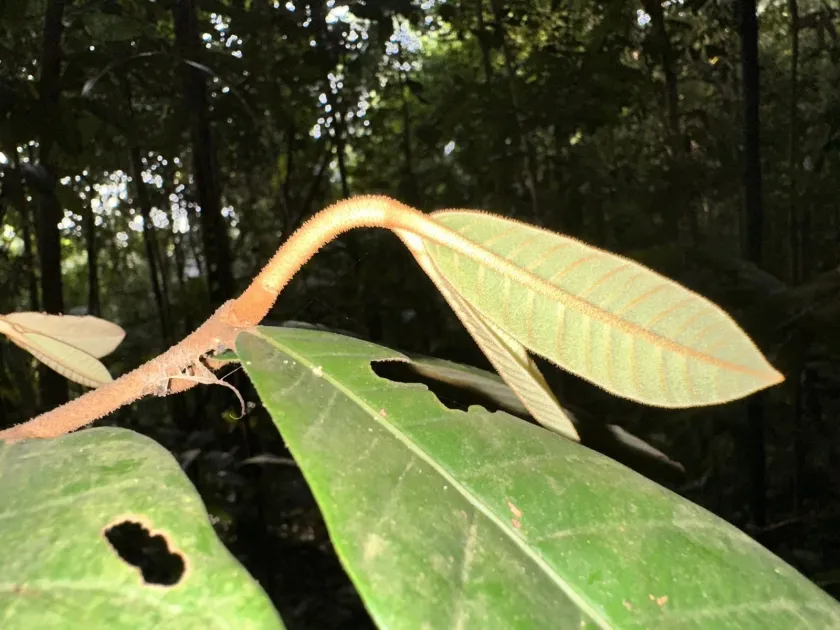
Botanically, it features a distinct straight trunk and lanceolate-shaped leaves that contribute to a dense canopy. The plant typically produces small, clustered flowers and seeds that are dispersed by forest fauna, emphasizing its role in ecosystem maintenance.
From an agricultural perspective, Knema laurina is valued for its durable timber, which is utilized in local woodworking and construction. It is often maintained within agroforestry systems to provide structural support for ecosystems while producing useful raw materials.