
Myristica cinnamomea
Myristica cinnamomea
Description
Sowing dates
Propagation of Myristica cinnamomea is primarily achieved through seeds, which must be sown immediately after harvesting due to their rapid loss of viability. The seeds possess high oil content, making them susceptible to drying out if not handled quickly.
In nursery settings, a well-draining, loose substrate enriched with organic matter is recommended. The seeds are typically placed horizontally and lightly covered with soil to maintain moisture without inducing rot.
Optimal germination requires stable tropical temperatures between 25°C and 30°C. High humidity levels are essential during this phase, often achieved through misting systems or controlled greenhouse environments.
Seedlings remain in the nursery until they reach a robust size, usually about 30–50 cm in height. During this time, they require filtered light to mimic the natural forest floor conditions where they thrive in the wild.
Field transplantation is scheduled to coincide with the onset of the wet season. This timing ensures that the young root systems have ample moisture to establish themselves in the soil before the transition to drier months.
Growing requirements
As a member of the Myristicaceae family, this species thrives in humid, tropical lowland environments. It is highly sensitive to frost and requires a frost-free climate with consistent warmth throughout the year.
The ideal soil profile is deep, fertile, and rich in humus, with excellent drainage properties. While the plant loves water, it cannot tolerate waterlogged conditions, which lead to root asphyxiation and disease.
Light management is a critical factor for success. Juvenile trees require shade to protect their leaves from scorching, whereas mature trees perform best when the top of their canopy has access to direct sunlight.
Consistent rainfall is necessary for the plant's metabolic processes. In areas where precipitation is seasonal, supplemental irrigation might be required to maintain soil moisture levels above the wilting point.
Nutrient management involves regular application of organic fertilizers. Applying mulch around the base of the tree helps retain soil moisture, suppresses weeds, and provides a slow-release source of nutrients as it decomposes.
Yield
Myristica cinnamomea is a perennial tree characterized by a long juvenile phase. Commercial production typically does not begin until the tree reaches 7 to 10 years of age, depending on environmental conditions.
Once the trees reach full maturity, often between 15 and 25 years, they can provide consistent yields for several decades. Productivity per tree is influenced by soil quality, tree health, and effective pollination.
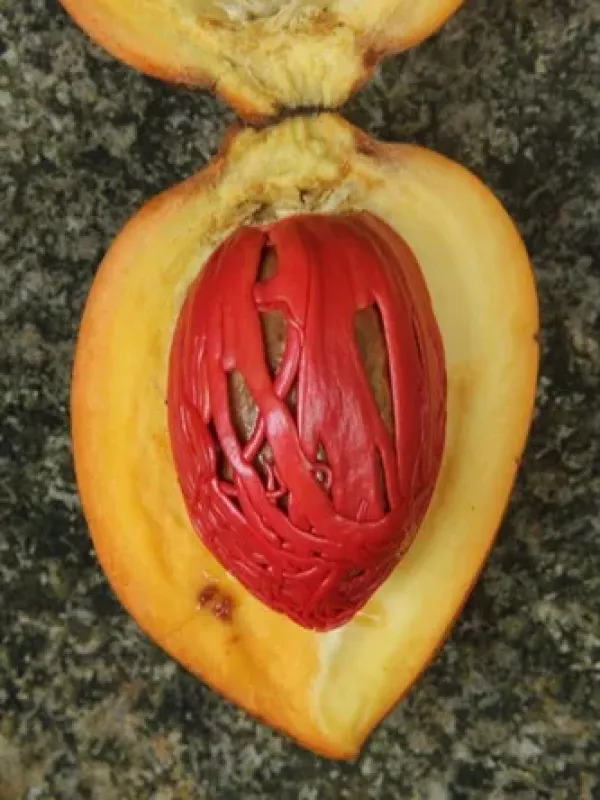
The fruit of this species is a fleshy capsule that splits upon reaching full maturity. Efficient harvesting requires tracking the fruit ripening process to capture the seeds at their peak oil content.
Pollination is predominantly biotic, carried out by various insects. Maintaining biodiversity around the plantation is an essential agronomic practice to ensure a healthy population of pollinators is present during the flowering season.
The total annual yield is affected by the tree's health and the climatic stability of the region. Proper pruning to allow light penetration into the center of the canopy can significantly improve fruit set and quality.
Main diseases and pests
The most significant threat to the health of these trees is root rot, particularly caused by Phytophthora species. This disease is most prevalent in poorly drained soils where stagnant water promotes fungal growth.
Foliar diseases, such as leaf spot fungi, can impair the plant's ability to perform photosynthesis, leading to reduced growth rates. Regular monitoring and the application of organic fungicides can mitigate these risks.
Boring insects represent another common threat to the woody stems of the trees. These pests can cause structural damage and weaken the tree, making it susceptible to secondary infections and environmental stress.
Parasitic epiphytes and climbers can strangle young trees if left unmanaged. Routine manual weeding and clearing of the trunk are necessary components of a professional plantation maintenance program.
Prevention is the best strategy for managing threats. By providing optimal growing conditions—specifically good drainage and proper spacing—most of these biotic stresses can be kept at manageable levels.
Harvesting
Harvesting is a manual process that requires skilled labor to reach the higher branches without damaging the tree. Using poles or specialized harvesting tools is standard practice in established plantations.
The fruit must be gathered shortly after falling or immediately upon splitting to prevent the seeds from being contaminated by soil fungi. Speed is essential to maintain the purity and quality of the spice.
Post-harvest processing involves removing the fleshy exterior (aril) and drying the seeds under shade. Controlled drying is necessary to reach the correct moisture content for long-term storage.
Proper storage is essential to maintain the aromatic profile of the product. The seeds should be kept in cool, dry, and airtight containers, away from direct sunlight, to prevent the oxidation of the volatile oils.
Quality grading based on seed size, weight, and the absence of physical blemishes is performed before distribution. This ensures that the final product meets market standards for culinary and industrial use.