
Knema intermedia
Knema intermedia
Description
Growing requirements
Knema intermedia is a perennial tree species belonging to the Myristicaceae family. It is natively distributed across the tropical rainforests of Southeast Asia, thriving particularly in regions of Thailand, Malaysia, and parts of Indonesia.
The plant demonstrates a strong preference for moisture-retentive, well-draining soils rich in decaying organic matter. In its native habitat, it typically occupies the understory, where canopy cover provides essential protection from intense, direct solar radiation.
Optimal growth is achieved under strict tropical conditions, characterized by high atmospheric humidity and minimal temperature fluctuations. Consistent warmth, ideally between 24 and 30 degrees Celsius, is vital for the physiological processes of the tree.
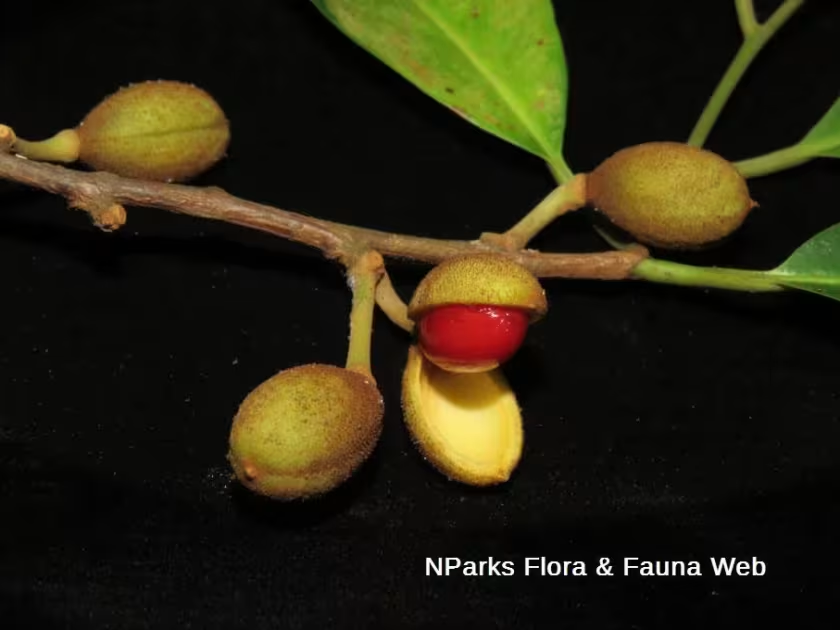
Botanically, it is classified as an evergreen species featuring leathery, simple leaves and distinct arillate seeds. Its morphology is adapted to survive in dense forest environments, with a shallow but efficient root system designed to absorb nutrients from the topsoil layer.
The economic utility of Knema intermedia is primarily centered on local forest management. The seeds are harvested for their oil content, while the wood is occasionally utilized for small-scale timber production and traditional woodworking applications.