
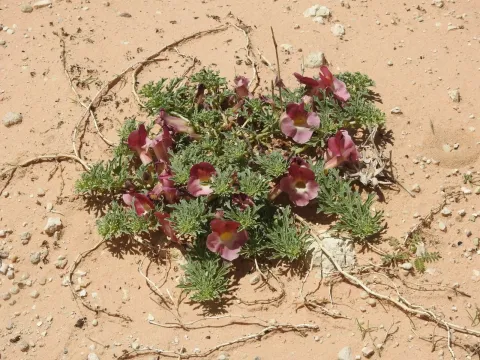
Harpagophytum
Harpagophytum
Harpagophytum, widely known as Devil's Claw, belongs to the Pedaliaceae family. The plant spreads naturally via woody fruits covered with sharp, hook-like appendages, which allow the seeds to disperse by attaching to passing animals.
What the section contains


Harpagophytum
In cultivation, sowing is a challenging task due to the seed's hard coat and natural dormancy. Pre-treatment methods such as mechanical scarification are essential to improve germination rates and uniformity across the field.
Seeds are typically planted in well-draining, sandy substrates that mimic the soil characteristics of the Kalahari desert. Consistent high temperatures, preferably above 25°C, are necessary to trigger successful germination of the seeds.
The sowing depth should not exceed 3 centimeters to ensure the seedling has enough energy to emerge. Over-watering during this phase must be strictly avoided as the seeds are prone to rotting in damp, stagnant environments.
Young seedlings develop a taproot very quickly, which makes them highly sensitive to transplanting. Therefore, direct seeding or using biodegradable pots is recommended to minimize root disturbance during the establishment phase.
The primary ecological requirement for Harpagophytum is an arid or semi-arid climate with distinct wet and dry seasons. It is a highly drought-tolerant crop that struggles significantly in humid, high-rainfall regions.
Full sun exposure is a mandatory condition for the healthy development of this plant. Sufficient solar intensity is required to support photosynthesis and the subsequent synthesis of secondary metabolites in the root system.
Soil type is crucial for this crop; it must be loose, sandy, and porous. Compact or heavy clay soils inhibit root penetration and increase the risk of fungal infections, which are the most common threats to the plant.
Nutrient requirements are relatively low compared to traditional vegetable crops. Excessive nitrogen application should be avoided as it stimulates aggressive vegetative growth rather than the development of the tuberous storage roots.
Soil pH should ideally range from 6.0 to 7.5. The crop is adapted to low-fertility environments, making it suitable for sustainable production systems in marginal areas where water scarcity prevents the growth of other plants.
Harvesting Harpagophytum is a long-term commitment, as the plant requires at least three to four years to produce tubers of sufficient size and concentration of active pharmaceutical ingredients, specifically harpagosides.
The harvest cycle concludes when the plant enters its dormant phase and the aerial foliage dies back. During this time, the plant retreats its metabolic energy into the secondary storage tubers, enhancing the quality of the raw material.
Manual or mechanized harvesting must be performed with precision to extract the roots without causing excessive fragmentation. Care must be taken to separate the secondary tubers, which contain the highest therapeutic value, from the main root system.
Post-harvest processing involves immediate cleaning, washing, and slicing of the tubers. Thin slices facilitate faster dehydration, which is critical to stop enzymatic degradation and fungal growth after the roots are lifted from the ground.
Drying is performed in controlled, well-ventilated conditions, preferably away from direct, harsh sunlight. Proper dehydration ensures that the chemical integrity of the active compounds is maintained, meeting international market standards for herbal medicine.