
Harpagophytum procumbens
Harpagophytum procumbens
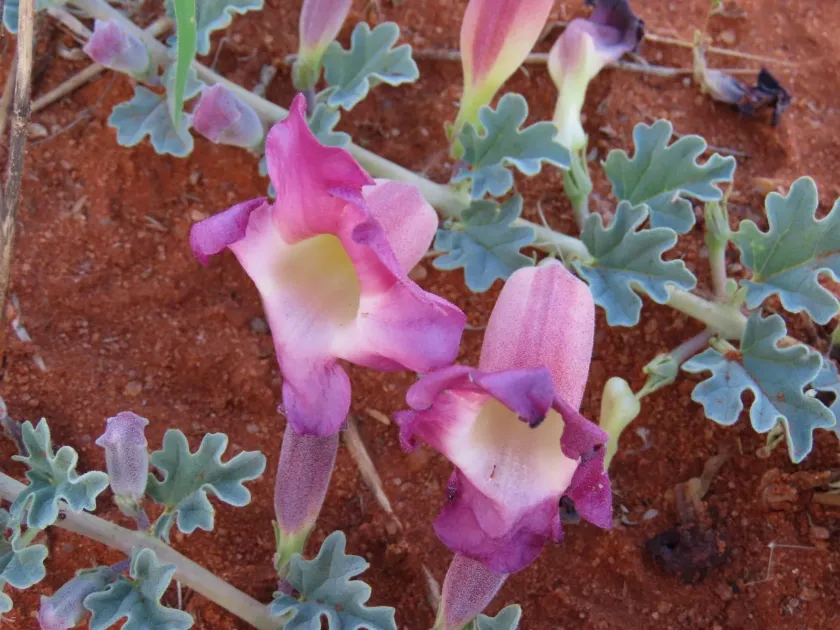
Description
Sowing dates
Harpagophytum procumbens, commonly known as devil's claw, is a perennial plant belonging to the Pedaliaceae family. Propagation typically starts with seeds, which require specific dormancy-breaking conditions to simulate the erratic rainfall of their native habitat.
Cultivation begins in greenhouses, where seeds are sown in well-draining, sandy substrates. It is essential to ensure consistent warmth to optimize germination rates, as the seeds have a naturally hard and protective outer layer.
Once seedlings develop their first true leaves, they are hardened off and transplanted into prepared field beds. Proper spacing is crucial, with at least one meter between plants to allow for the extensive development of their characteristic tuberous root system.
The early growth phase is relatively slow, requiring careful weed management. Using organic mulch can help maintain soil moisture during the establishment period while preventing weed competition in the rows.
Strategic planting dates are set to match the onset of the growing season, ensuring that plants have enough time to establish before the peak heat of the summer months, which is vital for their survival.
Growing requirements
The ideal soil for Harpagophytum procumbens is loose, sandy, and well-draining. This species thrives in arid to semi-arid conditions where the risk of waterlogging, which causes root rot, is virtually non-existent.
Full sun exposure is a mandatory requirement for this plant. Sufficient light intensity is necessary for the biochemical processes that lead to the accumulation of high levels of harpagoside in the secondary tubers.
Temperature management should mimic its native Southern African environment, with high daytime temperatures and cooler nights. Sudden drops in temperature or excessive humidity can cause significant stress to the foliage.
Watering must be very limited and strictly controlled. Any excess water promotes the development of pathogens that attack the roots; therefore, irrigation should only be applied during extreme droughts.
Soil pH should ideally be neutral or slightly acidic. Since the plant is adapted to nutrient-poor soils, heavy fertilization is generally unnecessary and can negatively alter the secondary metabolites of the plant.
Yield
Yield is measured by the biomass of secondary tubers harvested. Because these tubers take several years to mature, the economic cycle of this crop is long, typically requiring a three to four-year period from planting to harvest.
Commercial plantations are evaluated based on the concentration of active pharmaceutical ingredients. Achieving high yields involves consistent monitoring of plant health and ensuring that the tubers reach full maturity before the harvest.
Yield stability is improved through organized plantation management, which also serves to protect the natural wild populations of the species from over-harvesting, contributing to biodiversity conservation.
Depending on the cultivation intensity and local climate, yields can reach several tons of dried product per hectare. Careful record-keeping is necessary to optimize future planting cycles and soil management practices.
Processing yield involves cleaning and drying the harvested tubers to a specific moisture content, which is a critical step in ensuring the commercial quality and marketability of the product.
Main diseases and pests
Root rot is the most significant threat to the crop, primarily caused by waterlogged soil or poor drainage systems. This condition is difficult to treat, making preventative measures in soil selection paramount.
Nematodes pose a risk to the roots, potentially stunting growth and reducing the pharmaceutical quality of the tubers. Crop rotation and using certified soil are standard preventative strategies.
Pests like aphids and spider mites can attack the leaves during dry periods. While the damage is usually minor, severe infestations can weaken the plant, affecting its ability to store energy in the root tubers.
Mechanical damage to the roots during weeding can introduce fungal pathogens. Therefore, cultivation practices must be precise and gentle, minimizing any disturbance to the soil near the root zone.
Due to its status as a medicinal plant, the use of chemical pesticides should be strictly avoided to ensure that the final product meets the stringent safety standards required for human consumption.
Harvesting
Harvesting is performed by carefully digging up the secondary tubers once they have reached sufficient size and active ingredient concentration. Manual or semi-mechanized tools are used to avoid skin damage to the tubers.
Immediately after extraction, the tubers must be cleaned of all soil particles. Any delay in cleaning can lead to rapid contamination and difficulty in processing the raw material properly.
The roots are then sliced into thin pieces to facilitate fast and uniform drying. This process must be conducted in clean, well-ventilated drying facilities at moderate temperatures to prevent nutrient degradation.
Once dried, the slices are inspected for quality and color. The final product is packed in moisture-proof containers and stored in cool, dark environments to maintain its potency for export or domestic use.
The harvested devil's claw root is a key commodity in the global herbal medicine market, primarily sold for its proven anti-inflammatory and analgesic properties, particularly for arthritis treatment.