
Narrowleaf sesame
Sesamum angustifolium
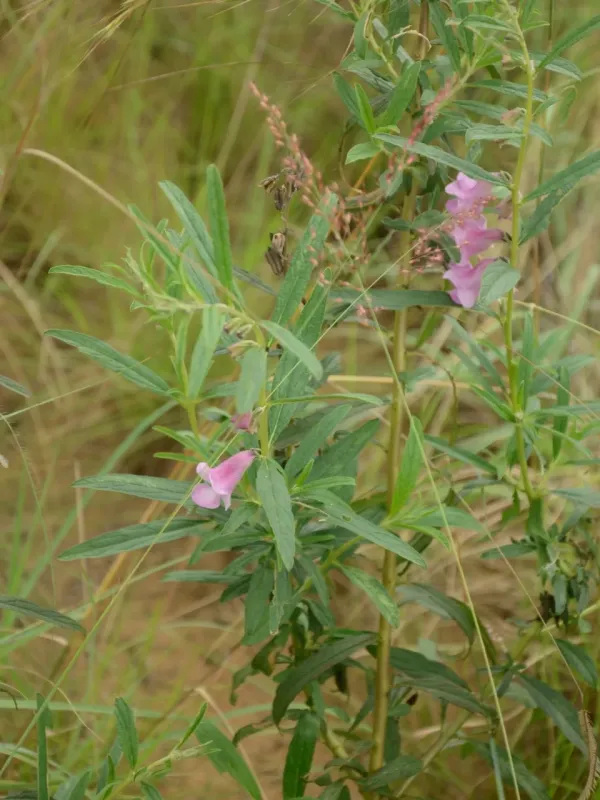
Description
Sowing dates
Narrowleaf sesame (Sesamum angustifolium) is a member of the Pedaliaceae family. It is an annual herbaceous plant that requires a consistently warm growing season to mature effectively.
Sowing should only occur once soil temperatures have stabilized at or above 18-20 degrees Celsius. Planting in cold soil will result in poor germination rates and stunted early development.
Given the small size of the seeds, they should be planted at a shallow depth of approximately 2-3 cm. Proper seedbed preparation is essential to ensure a firm, moist environment for optimal emergence.
Standard row spacing typically ranges from 45 to 60 cm. This configuration facilitates weed control, which is vital during the crop's slow-growing initial establishment phase.
It is recommended to choose well-drained, sandy loam soils. Direct seeding is the primary method of propagation, ensuring the soil surface is kept moist but not waterlogged.
Growing requirements
Sesamum angustifolium thrives in full sunlight. High light intensity is crucial for photosynthesis and the successful development of the seed-bearing capsules throughout the plant's life cycle.
The crop prefers well-aerated, fertile soils with a pH ranging from 5.5 to 7.0. Soils prone to compaction or waterlogging should be avoided as they significantly restrict root growth.
While the plant exhibits moderate drought tolerance, adequate moisture during the flowering and pod-filling stages is necessary to achieve high yields and high oil quality.
Nutrient management is key; the plant benefits from balanced nitrogen, phosphorus, and potassium fertilization, ideally guided by pre-planting soil tests.
Temperature management is straightforward: the plant requires a frost-free environment with high thermal accumulation throughout the entire duration of its growth period.
Main diseases and pests
Fungal pathogens, particularly those causing Fusarium wilt and leaf spots, pose the most significant risk to sesame crops, especially in high-humidity climates.
Cultural practices such as crop rotation are the first line of defense. Avoiding the cultivation of sesame on the same plot for at least three consecutive years helps disrupt disease cycles.
Insect pests, including aphids and spider mites, can severely damage plants by sap-feeding. If infestations occur, early detection is vital to mitigate growth suppression.
Weed competition can lead to total crop failure if not addressed during the early weeks of development. Mechanical or chemical weed control is necessary for success.
Implementing an integrated pest management strategy that includes monitoring and the use of targeted biological controls helps maintain crop health while minimizing environmental impact.
Harvesting
Harvesting timing is critical for narrowleaf sesame. It should commence as soon as the leaves yellow and the capsules begin to brown, but before they reach the point of natural dehiscence.
Many growers utilize a two-step harvesting process: cutting the plants and allowing them to dry in windrows to ensure uniform maturity and reduced seed moisture content.
Threshing must be handled with care using modified machinery designed to process small, fragile oilseeds, ensuring that mechanical damage is kept to an absolute minimum.
After threshing, the seeds must be thoroughly cleaned to remove plant debris, as impurities can significantly reduce the stability and marketability of the harvested seed lot.
Drying the seeds to a final moisture level of 8-9% is essential for safe, long-term storage in cool, dry conditions to prevent oil oxidation and rancidity.