
Aspergillus mold
Aspergillus fischerianus
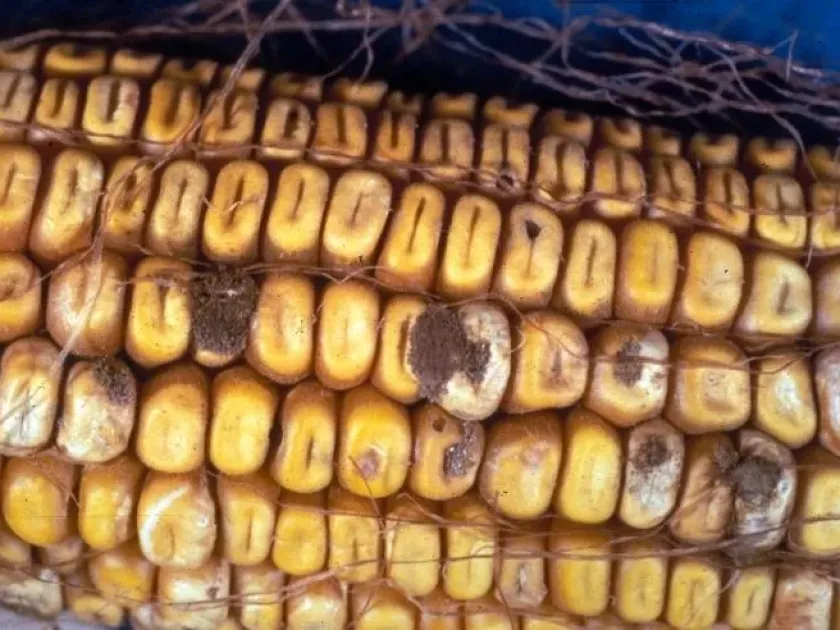
Description
Symptoms
The first signs of infection include the appearance of a dusty, white-to-greenish mold on the surface of the leaves. As the disease progresses, these patches become denser and may turn dark brown or olive-green.
Initial symptoms on pelargonium and geranium leaves often present as chlorotic spots that quickly turn necrotic. The affected areas lose their integrity and become soft, often collapsing under high moisture.
Leaf curling, yellowing, and premature abscission are characteristic symptoms as the infection spreads. The plant loses its natural turgor and wilts despite adequate soil moisture due to damaged conductive tissues.
In highly humid conditions, one can observe visible sporulating structures on the underside or surface of the leaves. These structures release thousands of spores into the air, facilitating rapid spread to neighboring plants.
Severe infestations result in stunted growth, distorted leaf shapes, and eventually the total decline of the plant specimen if left untreated.
Pathogen
The causative agent of this disease is the microscopic fungus Aspergillus fischerianus, a pathogen known for its opportunistic nature. It functions primarily as a saprotroph but can easily turn into an aggressive plant pathogen under favorable conditions.
The fungus produces vast amounts of conidia (spores) that easily disperse via air currents. It can persist in the soil substrate, on dead plant material, or on contaminated gardening tools for extended periods.
Once spores land on susceptible tissue, such as the leaves of geraniums or pelargoniums, they germinate and penetrate the epidermal layer. The fungus then uses its mycelium to spread throughout the plant's vascular system and intercellular spaces.
Aspergillus fischerianus secretes specialized enzymes and toxins that degrade plant cell walls, leading to tissue breakdown and providing nutrients for the fungus's continued expansion.
The biological lifecycle of this pathogen is remarkably fast, especially in controlled environments like greenhouses where temperature and humidity remain constant.
Conditions for development
High relative humidity (above 75%) is the most critical factor for the development of Aspergillus fischerianus. Moist leaf surfaces facilitate immediate spore germination and rapid mycelial colonization.
Poor ventilation within greenhouses leads to air stagnation, which prevents the foliage from drying out quickly after watering. This constant moisture layer on the leaves is an open invitation for the pathogen.
Warm temperatures ranging from 22°C to 28°C significantly accelerate the growth rate of the fungus. During these periods, an infection can spread through an entire plant collection within just a few days.
Overcrowding plants restricts airflow, which is essential for maintaining dry leaf conditions. Densely packed pots create a microclimate that traps moisture and fosters fungal growth.
Accumulation of decaying organic matter, such as dead leaves on the soil surface, serves as a breeding ground for the pathogen, allowing it to build up significant inoculum levels.
Why it matters
The primary harm caused by Aspergillus mold is the rapid destruction of the foliage, which is essential for the plant's photosynthetic activity. This leads to severe physiological stress and growth arrest.
As the disease progresses, it can move from the leaves to the petioles and stems, leading to systemic decay. This often results in the total death of the plant specimen.
Infected plants are significantly weakened, making them susceptible to opportunistic secondary infections by bacteria or other fungi, which can exacerbate the decline.
For ornamental growers, the loss of aesthetics caused by the mold renders the plants unsalable. This results in direct economic losses and the necessity for costly sanitation measures.
Additionally, the spores produced by Aspergillus species are known allergens. Their presence in a greenhouse environment poses a health risk to workers, as inhalation can trigger respiratory reactions.
Protection
The cornerstone of management is strict sanitation. All infected plant parts must be promptly removed and disposed of away from the growing area to prevent further spore distribution.
Improving airflow and ventilation is essential to lower the humidity around the foliage. Transitioning from overhead watering to drip or sub-irrigation significantly reduces the risk of leaf-borne infections.
- Sterilizing growing media before planting.
- Regular disinfection of all pots and greenhouse surfaces.
- Maintaining proper spacing between plants.
- Using systemic fungicides when symptoms appear.
- Monitoring humidity levels to keep them below critical thresholds.
Chemical control involving fungicides should be implemented in accordance with safety labels. It is important to rotate products with different modes of action to prevent the fungus from developing resistance.
Biocontrol agents, specifically those containing Bacillus subtilis, can be used preventatively. These beneficial microorganisms compete for space and nutrients on the leaf surface, effectively suppressing the colonization of the fungus.
Pathogens and affected parts
Affects crops · 3
Discussion
No discussions yet — be the first.