
Banksia
Banksia
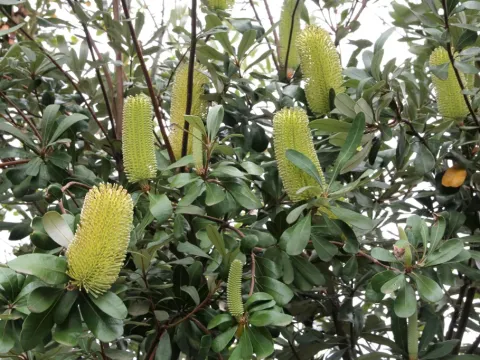
Banksia (lat. Banksia) is a genus of evergreen shrubs and trees belonging to the Proteaceae family. Native to Australia and New Guinea, these plants are renowned for their distinct flower spikes and woody cones.
What the section contains


Banksia
The cultivation of Banksia requires well-drained, nutrient-poor sandy soils. These plants have evolved to thrive in low-phosphorus environments, and they are highly sensitive to high levels of artificial fertilizers.
Sunlight is a critical factor for Banksia. They require full sun exposure to maintain vigorous growth and produce their signature inflorescences. In greenhouse environments, high light intensity must be maintained throughout the growing season.
Climatic requirements are strict: Banksias are not frost-tolerant. They prefer warm temperatures between 18°C and 25°C. In most temperate regions, they are cultivated primarily as greenhouse crops or container plants.
Water management is the most complex part of Banksia agronomy. The root system is prone to rotting if moisture levels remain too high. A rigorous irrigation schedule with low-mineral water is essential for plant longevity.
Phytophthora root rot is the most devastating disease for Banksia. It is typically triggered by overwatering, poor drainage, or contaminated soil, often resulting in rapid plant death.
Pests such as spider mites and mealybugs are common problems, especially in controlled greenhouse environments. They tend to thrive in dry conditions where airflow is insufficient.
Aphids can sometimes infest tender new shoots during the spring growth flush. Integrated pest management (IPM) practices should be used, emphasizing physical monitoring and biological controls.
Disease prevention relies heavily on soil hygiene and providing adequate ventilation. Once the root system is compromised by pathogens, there are few effective chemical remedies available for this species.
Growers must exercise extreme caution with fertilizers. An excess of phosphorus can be toxic to the plant, potentially leading to leaf yellowing and impaired growth, which is often mistaken for disease symptoms.