
Hairpin Banksia
Banksia spinulosa Sm. var. collina (R. Br.) A. S. George
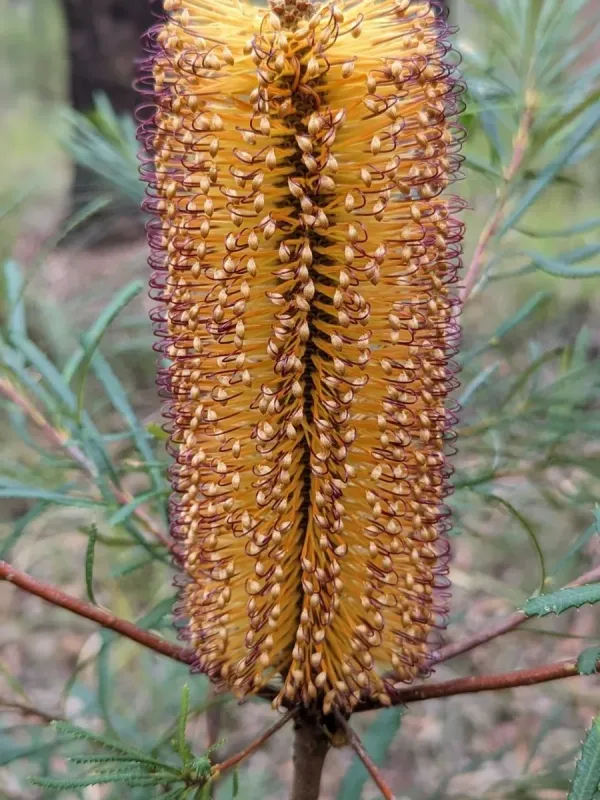
Description
Sowing dates
Seeds of the Hairpin Banksia are typically sown in early spring or autumn. To ensure optimal germination, seeds should be placed in a loose, well-draining substrate composed primarily of sandy soil and low-nutrient organic matter.
The germination process often benefits from heat treatment, mimicking the environmental conditions created by bushfires in their native Australian habitats. Maintaining a temperature range of 20–22 degrees Celsius is essential for successful seedling development.
Young plants are sensitive to root disturbance, so they should be pricked out into individual pots carefully. A deep container is recommended to accommodate the primary taproot as the plant grows.
When transplanting outdoors, choose a sunny site with excellent drainage. Proper spacing is crucial to prevent the spread of soil-borne pathogens and to ensure adequate sunlight reaches the lower branches.
In container gardening, repotting should be handled with extreme care to avoid damaging the delicate root system, which is adapted to nutrient-poor, rocky environments.
Growing requirements
Banksia spinulosa var. collina belongs to the Proteaceae family and is native to the eastern regions of Australia. It is a highly specialized shrub that thrives in acidic, well-drained, and nutrient-deficient soils.
The primary cultivation requirement is strict adherence to a low-phosphorus fertilizer regimen. These plants have evolved to capture phosphorus very efficiently, and standard fertilizers can easily cause toxic buildup in their tissues.
Climatic requirements involve stable temperatures and high light exposure. While they can withstand minor periods of drought once established, regular irrigation is required during the initial growth phase to support root development.
Air circulation is vital for this species, especially when grown in greenhouses or pots. Stagnant, humid air can trigger rapid foliage decline and fungal issues, significantly weakening the plant.
Soil structure should be sandy or gravelly, as heavy clay soils will cause root rot and rapid decline. Always ensure that the planting site prevents water accumulation after heavy rainfall.
Main diseases and pests
Root rot, primarily caused by the Phytophthora pathogen, is the most critical threat to the Hairpin Banksia. Once infected, the plant is difficult to recover, emphasizing the importance of preventing waterlogged soil.
Pests like mealybugs and spider mites may infest the plant, particularly in sheltered or indoor environments where air humidity levels fluctuate. Regular monitoring of the underside of leaves is recommended.
Scale insects can also be problematic, attaching themselves to stems and leaves. If detected, they should be removed mechanically or treated with horticultural oils to prevent further stress to the plant.
Nutrient toxicity, especially from excessive phosphorus, manifests as chlorosis or necrosis of the leaf margins. Adjusting the fertilization program is usually the only remedy for this non-pathogenic condition.
Grey mold (Botrytis) can affect the flower spikes during periods of high humidity. Keeping the planting area clean and ensuring good airflow will help mitigate this risk during the flowering season.