
Hooker's Banksia
Banksia hookeriana Meisn.
Description
Sowing dates
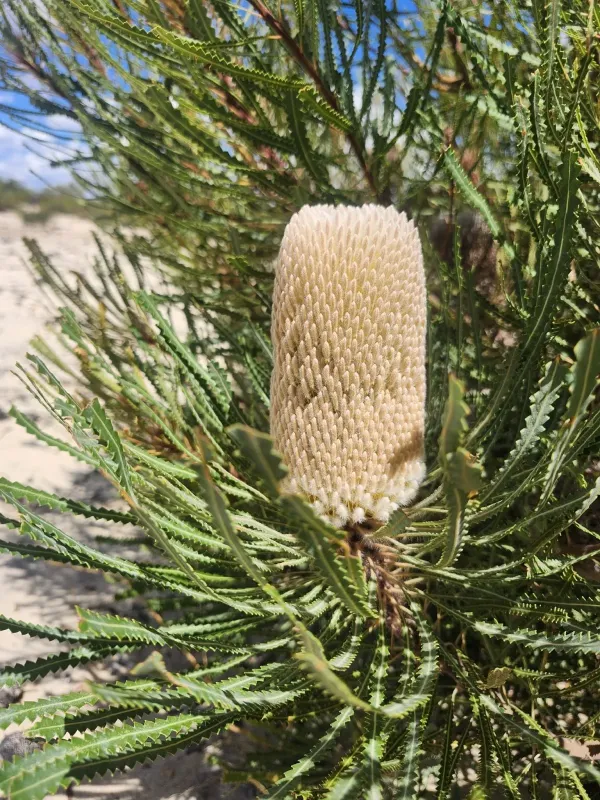
Hooker's Banksia (Banksia hookeriana) is a spectacular shrub from the Proteaceae family, found naturally only in Western Australia. The plant is characterized by a powerful lignotuber, an underground structure that allows it to recover after forest fires.
Propagation of the crop in commercial settings is most often carried out by seeds. Banksia seeds are contained in dense, woody follicles inside seed cones, which in their natural environment open only under the influence of extreme heat from fire.
To trigger germination in a nursery, the cones are heated in ovens or specialized drying cabinets at temperatures around 100-120 degrees Celsius for several minutes. After heat treatment, the seeds are easily extracted and sown into a prepared substrate.
The optimal time for sowing in regions with a suitable climate is the spring period, when the soil has warmed up sufficiently. When grown in greenhouses, sowing can be carried out year-round, provided that a stable temperature of about 20–22 degrees is maintained.
Banksia seedlings require careful watering and excellent ventilation to avoid fungal diseases. Transplanting young plants to a permanent location should be done with minimal damage to the root system, which is extremely sensitive to mechanical disturbance.
Growing requirements
The primary requirement for successful growth is the presence of deep, well-drained sandy soils with low phosphorus content. Hooker's Banksia has evolved in extremely nutrient-poor soils, so an excess of fertilizers can lead to plant death.
The crop prefers a Mediterranean climate with hot, dry summers and mild, wet winters. It is highly drought-tolerant, but moderate watering is required for high-quality cut flower production during the active growing season.
The plant requires maximum sun exposure throughout the day. Any shade negatively affects the formation of flower buds and the overall habit of the shrub, making it loose and less productive.
Soil pH should be slightly acidic or neutral. It is strictly recommended not to plant this crop in heavy clay soils, as moisture stagnation in the root zone inevitably leads to the development of root rots.
An important element of agronomy is maintaining the correct microclimate in the greenhouse if the plant is grown in non-native conditions. It is necessary to ensure air circulation that excludes the stagnation of moist air in the canopy.
Yield
Hooker's Banksia is valued as a commercial flower crop, providing a stable yield of exotic inflorescences. The productivity of a bush depends on the age of the plant, its pruning, and the conditions of maintenance.
The first inflorescences appear, as a rule, in the 3rd to 5th year of the plant's life. With age, the number of flower stalks increases, and under an intensive farming scheme, several dozen marketable inflorescences can be harvested from one mature bush per season.
The main commercial use of the crop is as fresh cut flowers for floral arrangements. Banksia inflorescences have high longevity in a vase, retaining their decorative appeal for two weeks or more.
Due to their rigid texture and unique shape, these inflorescences are popular both fresh and dried. Drying of the inflorescences is carried out naturally in well-ventilated, dark rooms, which allows for the preservation of their shape and rich color.
The profitability of cultivation is determined by proximity to markets and the ability to meet strict quality requirements regarding stem length and uniform flower opening within the inflorescence.
Main diseases and pests
The main threat to banksia plantations is the soil-borne pathogen Phytophthora cinnamomi. This fungus-like organism causes root rot, which is virtually untreatable and leads to the rapid death of the plants.
Pests such as mealybugs and scale insects can attack the shoots in greenhouse conditions. Regular monitoring and timely treatment with insecticides are necessary to maintain the marketable appearance of the flowers.
Caterpillars of certain butterfly species can also cause significant damage by feeding on young leaves and buds. In greenhouse settings, biological control methods are effective and help to reduce the pesticide load.
Excessive humidity in the root collar zone is a predisposing factor for the development of various types of mold. For prevention, it is necessary to use sterile substrates and avoid overhead watering at night.
Poor irrigation management leading to chlorosis is often a consequence not only of micronutrient deficiency but also of damage to feeder roots by pathogenic microflora, which makes disease diagnosis a complex task.