
Banksia spinulosa
Banksia spinulosa Sm.
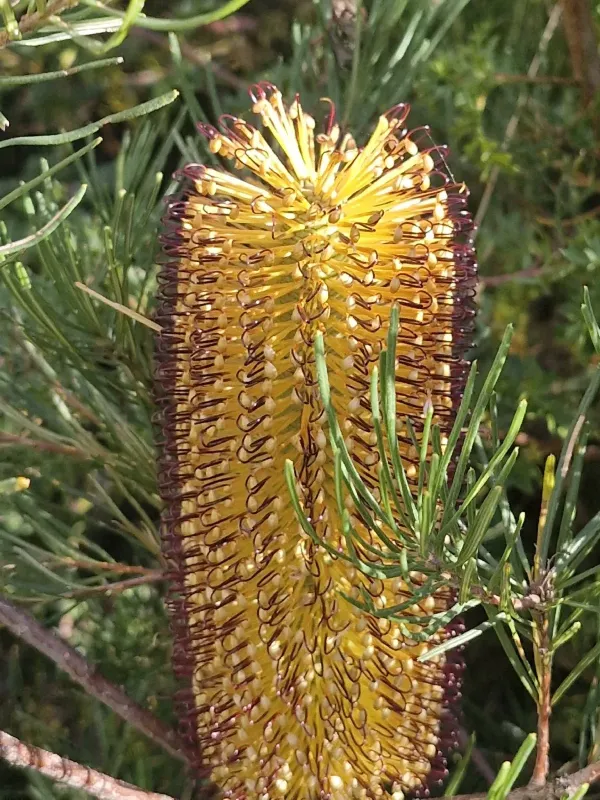
Description
Sowing dates
Banksia spinulosa, commonly known as hair-pin banksia, is propagated in professional settings through seed germination or vegetative cuttings. Seeds should be sown in a free-draining, sandy-peat mixture during the warmer months to ensure steady growth.
Seed treatment often involves careful exposure to heat to mimic the natural ecological cycle of Australian fire-prone habitats, which triggers the opening of the woody follicles.
Cuttings are highly recommended for the propagation of specific cultivars, ensuring that the offspring retain the desirable color and flower structure of the parent plant.
It is vital to use rooting hormones to increase the survival rate of cuttings, which should be kept in a humid, controlled environment until roots are well-established.
Hardening off young plants is a crucial stage before moving them to their permanent location to ensure they can withstand environmental fluctuations in their later stages of growth.
Growing requirements
This species belongs to the Proteaceae family and is native to Eastern Australia. It is highly adapted to nutrient-poor soils and requires specific environmental conditions to thrive in cultivation.
A primary agronomic requirement is a low-phosphorus environment. Over-fertilizing with phosphorus-rich compounds will quickly lead to toxicity, often resulting in rapid plant death.
The plant demands full solar exposure and exceptional soil drainage. It cannot tolerate waterlogging, which often leads to the decline of its sensitive, specialized root system known as proteoid roots.
Climate tolerance for Banksia spinulosa is limited to areas without extreme, prolonged frost, though it can survive brief cold spells. Greenhouse cultivation is necessary in regions with severe winters.
Watering must be strategic; it should be sufficient to support growth during the warm season but must be significantly reduced during cooler periods to prevent root decay.
Main diseases and pests
Root rot caused by Phytophthora species is the most severe threat to Banksia spinulosa, especially when drainage is inadequate or soil hygiene is neglected during cultivation.
Pests such as mealybugs and spider mites can infest the foliage and inflorescences in greenhouses where air circulation is poor and ambient humidity is inadequately managed.
Nutritional imbalances, particularly those caused by improper fertilization, manifest as severe leaf chlorosis, which stunts plant development and lowers its ornamental value.
Effective management includes maintaining strict soil sterility during the initial growth phases and implementing integrated pest management strategies to keep insect populations under control.
- Regular monitoring of root health
- Maintaining proper air flow around the foliage
- Removing and destroying infected plant material promptly