
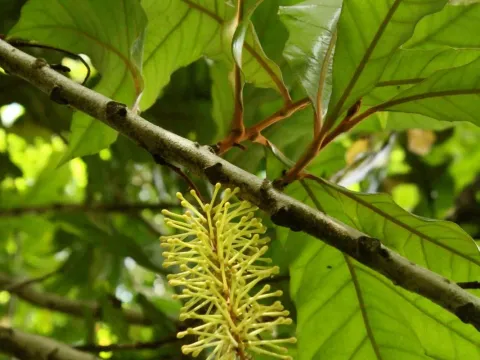
Athertonia
Athertonia
Propagation of Athertonia is primarily achieved through seeds, which should be sown in a well-drained, nutrient-rich media that mimics rainforest soil.
What the section contains

Athertonia
Seeds require high humidity and consistent warmth to germinate successfully, often benefiting from a period of light scarification before planting.
In nursery settings, it is essential to protect young seedlings from direct sunlight to ensure steady development of their root systems.
Transplanting into the permanent location should be timed with the onset of the rainy season to allow the plants to establish before drier periods.
Proper spacing is crucial to allow the tree to reach its full potential, as Athertonia can grow into a significant tree over its lifespan.
Athertonia belongs to the Proteaceae family and is native to the high-rainfall tropical rainforests of the Atherton Tableland in Queensland, Australia.
The tree thrives in stable tropical climates and is highly intolerant of frost, requiring protection from even minor drops in temperature.
Soil requirements include excellent drainage, as the species is susceptible to root rot if the roots are left in waterlogged conditions.
These plants prefer slightly acidic soils with high organic matter content, characteristic of undisturbed forest floors in their native range.
Adequate air circulation is necessary to prevent fungal issues, especially in regions with high ambient humidity levels during the growing season.
The yield of Athertonia trees consists of globular nuts enclosed in a hard, woody shell that protects the edible kernel inside.
Trees typically begin producing nuts after several years of growth, with yields increasing significantly as the tree reaches maturity.
Pollination is facilitated by native insects, and maintaining a healthy local ecosystem is vital for ensuring consistent fruit set each season.
The kernels are valued for their nutritional profile, though commercial production is currently limited to boutique or specialty markets.
Harvesting is usually done by gathering fallen nuts from the ground, ensuring that the fruit has reached full physiological maturity.
Root rot, primarily caused by Phytophthora species, is the most serious threat to Athertonia when drainage is inadequate.
Scale insects and mealybugs can infest the foliage and young branches, causing stunting if left untreated in the orchard environment.
Fungal leaf spots can occur during periods of prolonged wet weather, necessitating good pruning practices to improve airflow through the canopy.
Vermin and wild birds can occasionally damage the nuts before they reach the ground, requiring protective measures in small-scale plantings.
Integrated pest management, focusing on biological controls and maintaining tree vigor, is the most effective way to manage these threats.
Harvesting involves collecting mature nuts that have dropped to the ground, which indicates they are ready for processing and consumption.
After collection, it is necessary to remove any remnants of the husk and dry the nuts in a ventilated area to prevent molding of the kernel.
Correct moisture levels during drying are critical for the shelf life of the nuts, as high residual moisture can lead to rapid deterioration.
Nuts should be graded based on size and physical condition to ensure the best quality product for market or individual usage.
Storage should take place in dry, cool conditions using breathable containers to ensure the nuts remain viable for an extended period.