

Weed · affects Winter wheat, Winter barley, Maize
Especially harmful
Resistant to 2,4-D
Description
How to tell it apart
2,4-D resistant weeds are a diverse group of plant species that have developed or possess inherent tolerance to auxin-type herbicides. These plants often belong to families such as Chenopodiaceae, Caryophyllaceae, or specific grasses that naturally withstand synthetic growth regulators.
Identification is based on the lack of typical herbicidal symptoms, such as epinasty, twisting, or stem curling, that normally occur in sensitive species shortly after application. If a weed remains upright and green while neighboring susceptible weeds die, resistance should be suspected.
Many of these species have physical barriers such as thick cuticles, wax layers, or dense hairiness that reduce the absorption of the herbicide into the plant tissue.
Physiological resistance is another factor, where the weed's internal enzyme system rapidly metabolizes the active ingredient before it reaches the target site within the plant.
Often, resistance is observed when weeds have passed their most vulnerable developmental stage, making them less responsive to standard doses of 2,4-D.
Where it grows
These weeds are commonly found in continuous monocrop systems, such as wheat or corn fields, where frequent use of a single herbicide group has exerted high selection pressure on weed populations.
They thrive in various soil types and climatic conditions, often spreading from field margins, ditches, and non-crop areas into the primary cultivation zones.
Minimal tillage systems can encourage the persistence of these weeds, as their seeds remain in the upper soil layers, facilitating early germination and competition with crops.
The distribution of these resistant species is facilitated by farm equipment, as seeds can be transported on machinery between different plots and fields.
They are increasingly prevalent in intensive agricultural regions, occupying niches left empty by susceptible species that have been successfully controlled by herbicides.
Harm it causes
The primary economic impact is yield loss due to direct competition for light, water, and essential nutrients. When unchecked, these weeds can significantly reduce the final harvest output.
Resistant weeds act as secondary hosts for various pests and pathogens, complicating field sanitation and potentially increasing the need for additional pesticide applications.
Harvesting challenges are common, as weeds can increase the moisture content of the harvested crop and clog machinery, leading to increased drying costs and decreased product quality.
These weeds deplete soil fertility by absorbing nitrogen and other macronutrients, rendering fertilizer applications less efficient and increasing overall production costs.
Over time, the accumulation of seeds from resistant individuals in the soil seed bank poses a long-term threat, complicating future weed control efforts for several seasons.
How to control
The most effective strategy is the rotation of herbicide modes of action. Utilizing tank mixtures that combine 2,4-D with other active ingredients like sulfonylureas or dicamba can prevent the survival of resistant individuals.
Integrated weed management, including mechanical methods like deep plowing, helps bury seeds and disrupts the life cycle of problematic species.
Crop rotation is essential to vary the selection pressure on weeds. Changing the crop type requires changing the herbicide program, which effectively prevents the buildup of herbicide-resistant populations.
- Implementing herbicide programs with multiple modes of action.
- Applying herbicides at the earliest possible growth stage of the weeds.
- Practicing crop rotation to break weed life cycles.
- Using manual or mechanical weeding for localized resistant patches.
Field scouting and proactive monitoring are crucial to detect resistant patches early, allowing for targeted interventions before the weed population becomes dominant across the entire area.
Content graph
Connections · Resistant to 2,4-D
Most often together:
Marketplace
Products · 294


Flagman
«Нанджин Ессенс Файн-Кемікал Ко. Лтд» (Китай)
Herbicides
0
0
·
1.2K
3 offers
23.17 €per 1 l
Buy


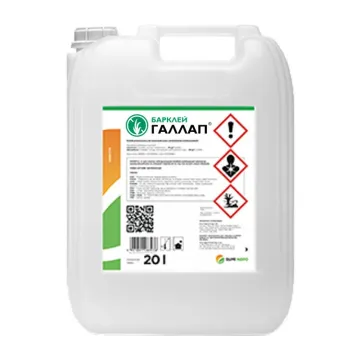
Barkley Gallap 360
рклей Кемікаоз Лтд, м.Дублін Ірландія
Herbicides
0
0
·
921
2 offers
8.15 €per 1 l
Buy


Benta
Sharda Worldwide Exports Pvt Ltd, Sharda World
Herbicides
0
0
·
621
3 offers
8.06 €per 1 l
Buy


Helios Extra
Шаньдун Чіаочан Кемікал Ко. Лтд. (SHANDONG QIAOCHANG CHEMICAL CO., LTD)
Herbicides
0
0
·
95
24 offers
4.33 €per 1 l
Buy

Imidh, RK (imazamox, 40 g/l)
Shandong Cynda Chemical Co., Ltd, КНР
Herbicides
0
0
·
86
4 offers
9.22 €per 1 l
Buy


DICBAN, RK
Ф.Суперус Ко ., Лтд., Гонг-Конг, Шанхай, Китай.
Herbicides
0
0
·
78
2 offers
11.24 €per 1 l
Buy

Napalm Forte
Шанхай Агрочайна Інтернешнел Трейд Ко., Лтд., Шанхай, Китай.
Herbicides
0
0
·
66
11 offers
5.16 €per 1 l
Buy


Felix WG
ДВА Кемікалс Ко. Лтд., Китай (DVAChemicalsCo.Ltd.),China;
Herbicides
0
0
·
62
1 offer
39.16 €per pack
Buy


Fuhua Glyphosate 757
Sichuan Leshan Fuhua Tongda Agro-Chemical
Herbicides
0
0
·
61
1 offer
5.29 €per 1 l
Buy


Barclay Harler
Barclay Chemicals Manufacturing Company
Herbicides
0
0
·
59
1 offer
8.32 €per 1 l
Buy


Good Harvest Glyphosate 360, RC
Jiangsu Good Harvest-Wayen Agrochemical Co., Ltd.
Herbicides
0
0
·
58
3 offers
1.02 €per pack
Buy


Alpha-Dicamba
«Юнісіті Ентерпрайсіс Л.П.», Единбург, Великобританія
Herbicides
0
0
·
57
2 offers
10.33 €per 1 l
Buy