


Prices in stores
from6.13 €per 1 l
pack from 5.95 € per 0.25 kg
12 offers from 9 stores
Last Treatment Interval, Days
1
By type of action
Systemic herbicide
By application method
Foliar herbicide
By Mode of Action
Selective herbicide
Your mark
0 votes
0% positive ratings
Store offers · 12 from 9 stores
12 offers in 9 stores — from 6.13 € per 1 l.
Available at: AgrariyFort · Агроексперт-Трейд · Agromen · Agrotorg · ePole · СоюзАгроКонсалтинг · uventa-com-ua · Yablukom · Yason Agro
Prices are collected automatically from store websites and converted at the current exchange rate. Check the price and availability on the store website before ordering.
About product
A reliable systemic herbicide for controlling persistent weeds in grain crops.
Description
Effective Weed Control for Grain Crops
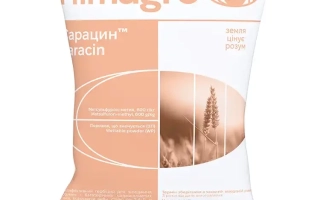
When working with winter wheat and barley, farmers often face the challenge of persistent perennials that standard treatments can't handle. In such cases, "Saracin" from Sunrise Chemicals Co. Ltd. proves to be a tool that genuinely clears the field. The active ingredient, metsulfuron-methyl, works systemically: it doesn't just burn the tops; it travels deep into the root system, which is crucial for controlling field thistle and bindweed.
Field Application Insights
It allows you to spray grain crops without worrying about crop damage. The wettable powder formulation requires proper preparation of the stock solution. If you follow the mixing technology, you won't experience issues with sprayer nozzles clogging.
- Efficiency: With a low application rate of up to 25 grams per hectare, it optimizes logistics and storage costs.
- Systemic Action: It handles common lambsquarters and thistles effectively, which often survive other treatments.
- Flexibility: Being a post-emergence herbicide, it acts as a reliable insurance policy when weeds have already entered their active growth stage.
It is important to remember the 3rd hazard class, so standard safety measures must be followed during application. It is also vital to monitor temperature conditions, as systemic herbicides work best during the active weed growth phase. After treatment with Saracin, the field remains clean without competition from aggressive weeds, allowing the crop to fully utilize fertilizers and soil moisture.
Composition
Active ingredients
- Metsulfuron-methyl гербицид Производные сульфонилмочевины
Application
Used on crops
Specifications
| Last Treatment Interval, Days | 1 |
|---|---|
| By type of action | |
| By application method | |
| By Mode of Action | |
| By Application Timing | |
| Form of the preparation | |
| Application rate | Up to 25 g/ha |
| Danger Class | 3 |
| Registration year | 2008 |
| Catalog | Catalog → Herbicides, Desiccants |
| Manufacturer | Sunrise Chemicals |
| Legal data |
Show · 1
|
| Country | China |
No reviews yet. Be the first to share your experience.
Alternatives
Herbicides, Desiccants · similar preparations


See also
Often considered together with this product



Recently viewed
Products you’ve viewed on this site
Reviews