Protezhe, RC, (Bentazon, 560 g
Jiangsu Agricoem Laboratory Co., Ltd.
Herbicides
0
0
·
27
3 offers
9.53 €per 1 l
Buy
Datura stramonium
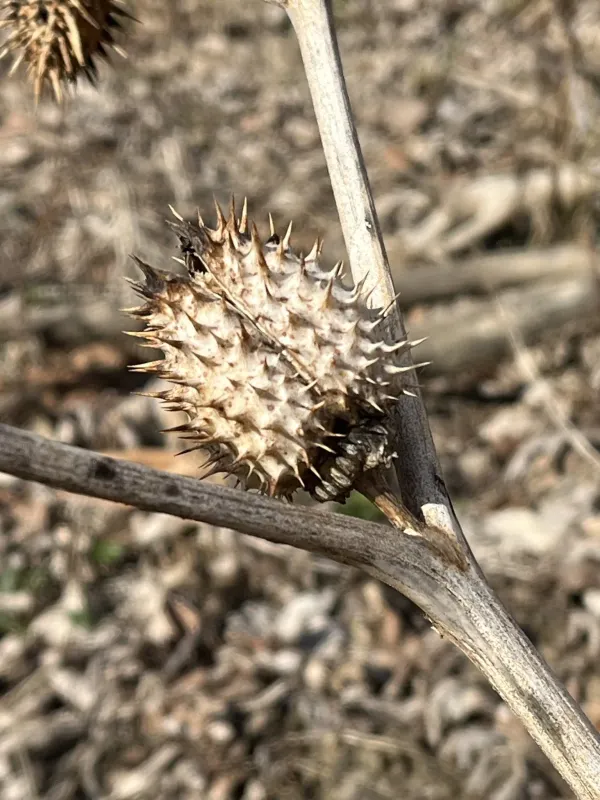
Jimsonweed is an annual herbaceous plant belonging to the Solanaceae family. It features a thick, branched stem that can grow up to 1.2 meters in height and large, ovate leaves with pointed tips.
The flowers are trumpet-shaped, typically white or pale violet, and are known for their pungent, heavy scent, especially during the evening hours when they fully open.
The fruit of the plant is a dry, egg-shaped capsule covered in sharp spines. Once mature, it splits into four sections, scattering hundreds of seeds across the field.
Seeds are dark brown or black, kidney-shaped, and possess a rugged surface, allowing them to remain viable in the soil for several years.
The root system is a sturdy taproot that allows the plant to anchor itself firmly and extract water from deeper soil profiles.
Jimsonweed thrives in fertile, well-drained soils rich in nitrogen. It is commonly found in disturbed areas, abandoned lots, along roadsides, and near animal confinement facilities.
In agriculture, it is a significant nuisance in row crops such as corn, soybeans, sunflowers, and sugar beets, where it exploits available space and nutrients.
The plant is highly responsive to heat and sunlight, making it a prolific summer weed that competes aggressively for environmental resources.
It often colonizes irrigated fields and damp depressions, where it can grow rapidly and overwhelm young crop plants.
Due to its high seed production, it can quickly colonize large areas if left unchecked during the initial stages of infestation.
Jimsonweed is a highly toxic plant containing alkaloids like atropine and scopolamine, which pose lethal risks to livestock if consumed in contaminated feed or hay.
Its massive growth habit and broad leaves create significant shade, which severely stunts the development of young agricultural crops.
The weed is a heavy feeder that depletes soil moisture and essential macronutrients, resulting in substantial yield losses for the primary crop.
Seeds found in harvested grain can contaminate the batch, leading to higher processing costs or rejection of the product due to quality safety standards.
It also acts as an alternative host for various crop viruses and insect pests, increasing the disease pressure within the field environment.
Effective management starts with deep tillage, which helps bury seeds to depths where they are less likely to germinate and establish successfully.
Mechanical control through timely row cultivation is crucial, especially when the weed is in its seedling stage before reproductive growth begins.
Chemical control using selective herbicides is often necessary for large-scale infestations to effectively reduce the plant population without harming the crop.
Sanitation practices, such as removing weeds from field edges and irrigation ditches, prevent the further spread of seeds into the production area.