
Henbane
Hyoscyamus niger
Description
How to tell it apart
Black Henbane (Hyoscyamus niger) is a member of the Solanaceae family. It is an herbaceous biennial plant with a sticky, hairy texture and an unpleasant odor.
During the first year, it forms a basal rosette of leaves. In the second year, it produces a stout, erect stem ranging from 30 to 100 cm in height.
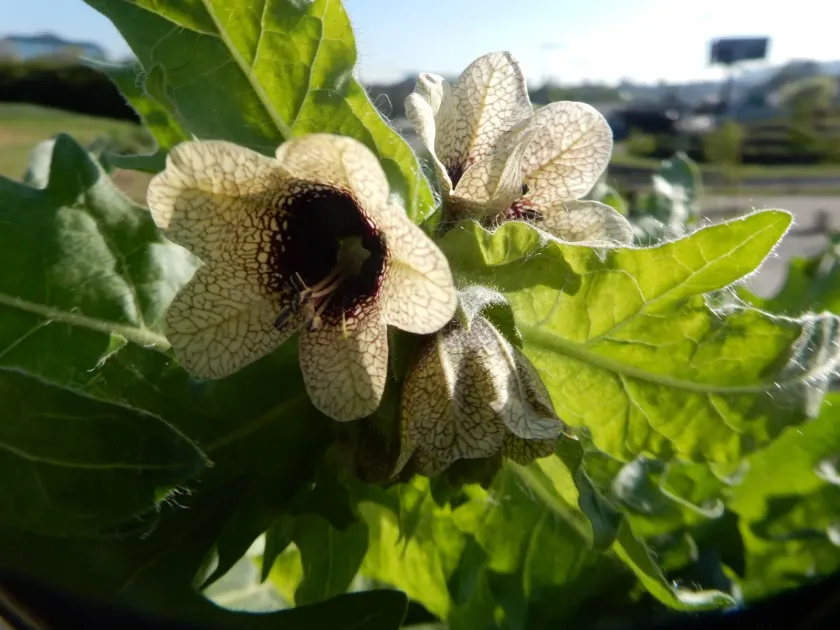
The flowers are funnel-shaped, characterized by a dull yellow color with distinctive purple veins and a dark center.
The fruit is a pyxis (a capsule with a lid) containing numerous tiny, greyish-brown seeds that are easily dispersed.
The taproot is fleshy and strong, which allows the plant to survive in various soil types and environmental conditions.
Where it grows
Henbane is widely distributed across temperate regions of Europe and Asia, often found in disturbed environments such as roadsides and pastures.
The plant thrives in nitrogen-rich soils and is frequently found near animal farms, waste disposal areas, and abandoned agricultural land.
It prefers sunny locations and loose, well-drained soil, making it a common sight in fields that are not properly managed.
This species is highly resilient to cold and can persist in harsh climates, often invading fields after the primary crop has been harvested.
Its seeds can remain dormant in the soil for a long duration, making it a significant challenge to eradicate permanently from infested areas.
Harm it causes
The plant contains potent tropane alkaloids, including hyoscyamine and scopolamine, which are highly toxic to both humans and livestock.
In grazing lands, the presence of henbane poses a severe risk to cattle and horses, as consumption of the plant causes nervous system dysfunction.
As an agricultural weed, it competes with cash crops for vital resources such as sunlight, nitrogen, and soil moisture, leading to yield loss.
The contamination of harvested fodder or grain with henbane seeds significantly lowers the commercial value and safety of agricultural products.
The presence of henbane can also harbor pests and diseases that are detrimental to other crops within the same Solanaceae family.
How to control
Cultural control involves mechanical weeding, specifically removing the rosette before the flowering stage to prevent seed dispersal.
Deep cultivation and plowing are effective strategies for burying seeds and preventing them from germinating in the topsoil layers.
Crop rotation that includes vigorous ground-covering species helps to shade out the weed and suppress its growth in the long term.
Chemical control includes the application of systemic herbicides such as 2,4-D or other selective formulations during the early growth stages.
Preventative measures like maintaining clean field boundaries and ensuring seed purity are essential to reducing the spread of this noxious weed.
Taxonomy
- Latin name
- Hyoscyamus niger
- Family
- Ядовитая растительность