

Terramidin
Nanjing No.1 Pesticide Factory of Red Sun Group Co., Ltd.
Herbicides
0
0
·
1.1K
1 offer
7.61 €per 1 l
Buy
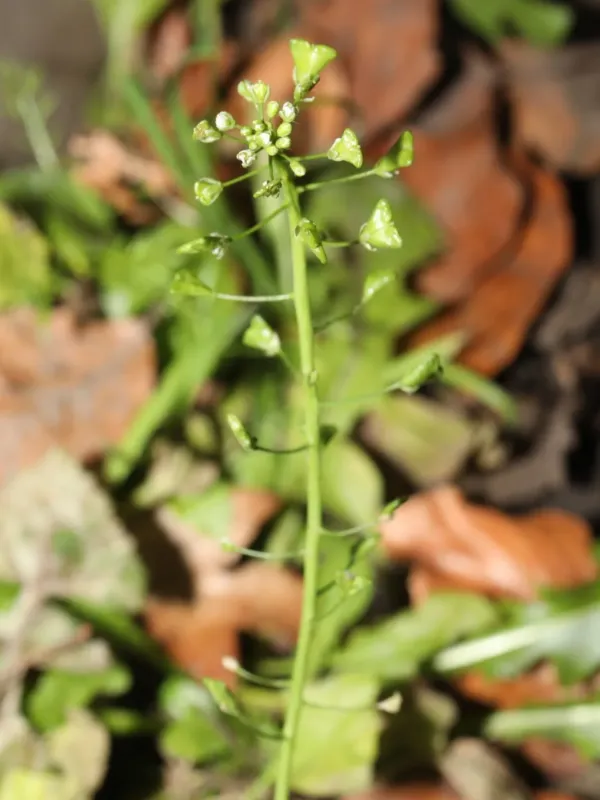
Shepherd's purse (Capsella bursa-pastoris) is a common annual or wintering herbaceous plant in the Brassicaceae family.
It forms a basal rosette of pinnately lobed leaves, while the stem leaves are alternate and clasp the stem with arrow-shaped bases.
The small, white, four-petaled flowers are arranged in racemes that elongate significantly as the fruits develop throughout the season.
The fruit is a distinctive, heart-shaped or triangular silicle (pod) that resembles a traditional shepherd's pouch, containing numerous tiny seeds.
The plant exhibits high phenotypic plasticity and can produce several generations within a single growing season, making it a persistent agricultural pest.
Shepherd's purse is a cosmopolitan weed, found worldwide in cultivated fields, pastures, gardens, and along roadsides or disturbed sites.
It heavily infests winter and spring cereal crops, vegetable crops, and orchards, thriving in diverse soil types and environmental conditions.
This weed is especially prevalent in nutrient-rich soils, where it can quickly establish dominance before crop canopy closure occurs.
It often acts as a pioneer species on fallow land, utilizing its ability to germinate throughout most of the year to colonize new areas.
The seeds can remain viable in the soil seed bank for over a decade, necessitating long-term management strategies for effective control.
The primary harm is the intense competition with crops for water, essential nutrients, and sunlight, leading to significant biomass reduction in cash crops.
Shepherd's purse acts as an alternative host for several crop pests, such as aphids and flea beetles, and vectors for various plant viruses.
Severe infestations interfere with harvesting machinery and increase the moisture content of grain, complicating post-harvest drying and storage.
Economic losses are cumulative, caused by both direct yield reduction and the increased costs associated with repeated herbicide applications.
Dense populations of this weed can drastically suppress the development of young seedlings in high-value vegetable and grain production systems.
Integrated weed management includes crop rotation, shallow tillage, and timely cultivation to kill seedlings before they reach the flowering stage.
Stale seedbed techniques are highly effective for reducing the weed population in the soil before planting the main crop.
Chemical control involves the use of selective herbicides, particularly those targeting broad-leaved weeds in cereals and other commercial crops.
Preventative measures, such as using certified seed and cleaning farm equipment, are essential to stop the spread of seeds between different fields.


