
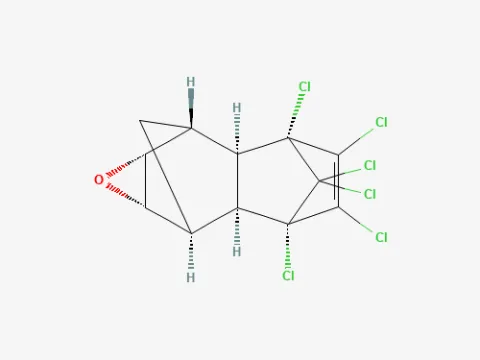
Endrin
Endrin belongs to the group of organochlorine compounds, specifically to the cyclodiene derivatives. In its chemical structure, it is a stereoisomer of dieldrin, possessing high lipophilicity.
What the section contains
Endrin
The mechanism of action involves blocking the transmission of nerve impulses within the pest's organism. Endrin acts on the insect's central nervous system, causing persistent depolarization of neuron membranes.
As a result of exposure, insects suffer from irreversible convulsions, paralysis, and subsequent death. The substance can enter the organism through contact or by ingestion of treated plant tissues.
A crucial feature of this compound is its extremely high persistence. It can maintain biological activity in soil and plant tissues for a very long period.
Due to its pronounced neurotoxic effect, endrin demonstrates high efficacy against a wide range of chewing and sucking insects, though it possesses low selectivity.
Historically, endrin was widely used for controlling a complex of pests across various agricultural crops. Primary targets included Lepidoptera, Coleoptera, and Orthoptera species.
Specifically, the preparation effectively suppressed populations of cotton bollworm, various leaf-eating caterpillars, and soil-dwelling wireworms. It was also used to control pest populations in cereal crops and potatoes.
In addition to its insecticidal action, endrin exhibited activity against small rodents, leading to its application as a rodenticide in certain past agricultural conditions.
Currently, the use of endrin is almost universally banned or strictly limited by international conventions due to its high toxicity to warm-blooded animals and aquatic organisms.
The preparation is extremely dangerous to beneficial entomophages and pollinating insects, rendering it unusable in modern integrated pest management systems.
Endrin is classified as a highly toxic substance to humans, mammals, fish, and birds. Exposure causes severe damage to the nervous system, liver, and kidneys.
A major issue with its use is the substance's potential for bioaccumulation. Endrin accumulates within food chains, posing a threat to the environment and the health of end-consumers of agricultural products.
The international Stockholm Convention on Persistent Organic Pollutants has listed endrin among banned substances. Its production, use, and international trade have been almost entirely discontinued in most countries.
Residual amounts of endrin in the soil can persist for decades, requiring complex remediation of contaminated sites and rigorous product quality control.
The use of any analogs or residual stocks of this class of substances in modern agriculture represents a grave violation of agroecological standards and safety regulations.