
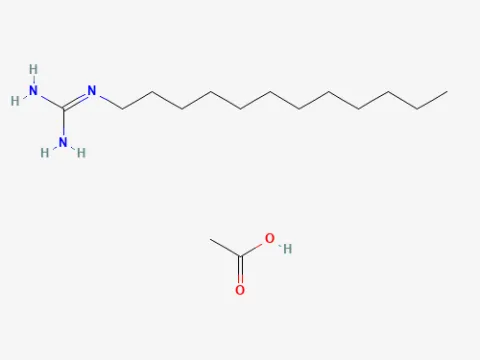
Dodine
Dodine belongs to the guanidine chemical class. It acts primarily as a contact fungicide, demonstrating the ability to penetrate the cuticle layer of plant tissues, which provides durable surface protection.
What the section contains
Dodine
The mechanism of action involves disrupting the permeability of fungal cell membranes. Dodine causes the disorganization of the lipid layer, leading to the leakage of cellular contents and the eventual death of the pathogen.
This substance provides both preventative and curative effects. It effectively inhibits the germination of fungal spores on leaf and fruit surfaces, preventing primary infection and mycelial growth.
A key feature of Dodine is its capacity for redistribution on the plant surface. Under conditions of high humidity or rainfall, the active ingredient can migrate locally to cover previously untreated areas of the tissue.
As Dodine has virtually no systemic properties, the quality of application is critical. Thorough coverage of all vegetative organs is essential to achieve maximum efficacy against targeted fungal diseases.
Dodine is primarily used for protecting fruit crops, such as apples and pears, against a wide range of fungal pathogens.
The substance is most effective in controlling scab (Venturia inaequalis). It suppresses pathogen development even at lower temperatures, which is particularly beneficial for early spring applications.
Beyond scab, Dodine shows activity against various leaf spot diseases, helping to maintain a lower overall inoculum pressure in the orchard throughout the growing season.
Regular use of the preparation reduces the risk of post-harvest fruit rot, provided that applications are performed according to the schedule during the vegetative phase.
Dodine is often integrated into orchard disease management programs, where it is rotated with fungicides of different chemical classes to prevent the development of resistance in pathogens.
Application rates depend on the specific formulation and the level of disease pressure, typically ranging from 0.5 to 1.5 kg of active ingredient per hectare.
Treatment timing is closely linked to the phenological stages of fruit crops. The most critical windows are the "green tip" and "pink bud" stages, when the risk of primary scab infection is at its peak.
The interval between treatments is usually 7–12 days, depending on weather conditions and the rate of new foliage growth.
If heavy rainfall is expected, it is advisable to shorten the intervals between applications, as the concentration of the fungicide on leaf surfaces gradually decreases over time.
When preparing tank mixes, it is necessary to consider the compatibility of Dodine with other pesticides to avoid phytotoxicity, especially when avoiding combinations with oils.
Dodine is classified as a moderately hazardous compound. Operators must wear personal protective equipment, including respirators, gloves, and protective clothing, during handling and application.
The preparation can cause irritation to the skin and eyes; therefore, direct contact with the concentrate or the working solution must be strictly avoided.
Do not apply the product near water bodies, as it exhibits high toxicity to aquatic organisms. Additionally, safety measures must be taken to protect pollinators during the flowering period.
Adherence to application regulations and pre-harvest intervals ensures that no harmful residues remain in the final produce, making the harvested crops safe for consumption.
To prevent the emergence of resistant pathogen strains, it is recommended not to exceed three applications of guanidine-based fungicides in a single agricultural season.