
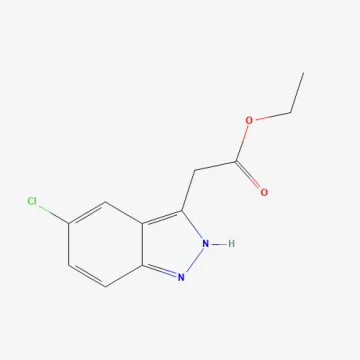
Ethychlozate
Description
Mode of action
Ethephon belongs to the class of plant growth regulators known as ethylene releasers. Upon entering the plant tissues, the active substance undergoes metabolic processes that gradually release ethylene, which acts as a key signaling molecule for plant development.
The primary physiological effect is the acceleration of tissue senescence, which induces the abscission of leaves, fruits, or flowers. Unlike more aggressive chemicals, ethephon provides a controlled effect, promoting uniform plant response.
The compound interferes with the plant's hormonal balance by suppressing auxins, which are responsible for keeping leaves and fruits attached to the stem. This shift triggers the formation of an abscission layer at the base of the fruit or leaf stalk.
Systemically, the substance distributes within the plant, inducing a managed stress response that forces the plant to transition from active vegetative growth to maturation and senescence phases.
The efficacy of ethephon is highly dependent on ambient temperatures and the physiological status of the crop at the time of application, which dictates the timing and intensity of the treatment.
What it targets
The primary agricultural role of ethephon is to serve as a defoliant and a maturation stimulant. It is extensively used to facilitate mechanical harvesting by synchronizing fruit or leaf drop.
In cotton production, ethephon is used to remove leaves, which reduces trash content during machine harvesting and prevents contamination of the cotton fiber within the bolls.
In fruit orchards, ethephon is employed for fruit thinning. By reducing the number of developing fruits, it prevents over-cropping, which leads to larger and higher-quality yields on the remaining fruits.
It is also highly effective in citrus cultivation, where it is used to accelerate fruit coloration and loosen the connection between the fruit and the stem to improve harvest efficiency.
By effectively managing the maturation process, ethephon ensures that crops across large areas reach the harvest stage simultaneously, optimizing labor and equipment usage.
Rates and timing
Application rates for ethephon are determined by the crop type, the desired growth stage, and regional climatic conditions. It is usually applied as a spray solution prepared according to precise concentration guidelines.
Applications must be timed when the crop reaches biological maturity but before natural senescence begins. Applying too early may reduce overall yield or compromise the quality of the harvested produce.
For crops like cotton, application should occur once the bolls are sufficiently open, ensuring that fiber quality is preserved. Spraying is typically conducted using ground or aerial equipment.
Environmental conditions play a crucial role; lower temperatures may require adjusted application rates, as ethylene release is slower in colder environments compared to warmer ones.
Operators must adhere to pre-harvest intervals to ensure that no residues remain in the crops, complying with safety regulations set for agricultural food production.
Restrictions
Ethephon is classified as a moderately hazardous substance. Personal protective equipment, including skin and respiratory protection, is essential during the handling and application of the product.
Avoid applying ethephon during windy conditions, as the drift of the active solution can significantly harm non-target crops that may be sensitive to ethylene exposure.
Mixing ethephon with alkaline pesticides should be strictly avoided, as high pH environments cause rapid degradation of the active ingredient, resulting in complete loss of efficacy.
Storage should be in a cool, dry, and well-ventilated area, keeping the product away from open flames or heat sources due to the flammability of certain solvent-based formulations.
Equipment used for spraying must be thoroughly cleaned after use to remove any residues, preventing unintended damage to other crops during future agricultural activities.
Status in the European Union
Not approved in the EU
- CAS number
- 27512-72-7
EU status is for reference only and does not replace national registration in your country.