
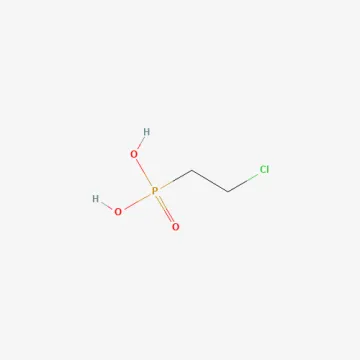
Ethephon
Description
Mode of action
Ethephon is a versatile plant growth regulator belonging to the organophosphorus chemical class. It acts primarily as an ethylene-releasing agent, providing crops with this vital phytohormone that modulates developmental processes.
Once applied, the substance is absorbed by plant tissues and undergoes a chemical transformation to release ethylene gas. This hormone triggers various physiological pathways, such as fruit maturation, color development, and the stimulation of senescence in leaves or fruits.
In cereal crops, ethephon functions as a potent retardant. By suppressing the activity of auxins, it reduces the length of internodes and strengthens the straw, effectively minimizing the risk of lodging in wheat and barley.
The systemic nature of ethephon ensures that the ethylene effect is distributed throughout the treated part of the plant. The efficacy of the treatment is highly dependent on environmental factors, particularly temperature and internal cellular pH.
Farmers utilize ethephon as a strategic tool to synchronize plant development, allowing for more efficient management of labor, machinery, and harvest windows, ultimately leading to higher productivity.
What it targets
Ethephon is extensively used in cereal grain production, including wheat, barley, and rye, where it serves to stabilize the crop and prevent lodging. This is essential for protecting yields in highly fertile soils and under intensive nitrogen fertilization.
In the horticultural sector, it is vital for accelerating the ripening of tomatoes. This application ensures that a larger percentage of fruit matures simultaneously, facilitating mechanized harvesting and reducing post-harvest losses.
It is also applied to fruit trees such as apples and cherries to promote uniform ripening and to loosen the fruit stem, making manual or mechanical harvesting significantly easier and more efficient.
Additionally, ethephon is used on industrial crops like pineapples to induce flowering. This technology allows producers to control the timing of the harvest to meet market demands effectively.
- Wheat, barley, and rye (lodging control)
- Tomatoes (accelerated ripening)
- Apples, cherries, and stone fruits
- Pineapples (flowering induction)
Rates and timing
Application rates for ethephon are highly specific to the target crop and the desired physiological effect. For cereals, it is typically applied during the stem elongation stage (jointing) to ensure optimal straw strengthening.
When used on tomatoes, the timing is critical: the application is usually made when the fruit has reached the mature green or breaker stage. This timing ensures that the ethylene effect will lead to consistent color development across the field.
Temperature management is crucial for the success of ethephon applications. The ideal temperature range is between 15°C and 25°C. Applications outside this range may lead to reduced performance or, in extreme cases, phytotoxicity.
The product should not be applied to crops stressed by drought or severe disease, as the plant's weakened metabolism may respond unpredictably to the hormonal surge, potentially damaging the overall yield.
Careful calibration of equipment is necessary to ensure uniform coverage, as uneven distribution can cause inconsistent fruit maturation or uneven straw height across the field.
Restrictions
Safety is a priority when handling ethephon; protective gear, including gloves and respirators, should be used to prevent skin contact and inhalation. The chemical can be irritating to mucous membranes and eyes.
Ethephon should not be mixed with strongly alkaline pesticides or fertilizers. High pH solutions may cause the decomposition of ethephon into ethylene gas prematurely in the spray tank, rendering the treatment ineffective.
Storage must be in a cool, well-ventilated, and dry area. The product is sensitive to high temperatures and direct sunlight, which can compromise its stability over time. Keep the containers tightly sealed at all times.
Adherence to pre-harvest intervals is mandatory to comply with food safety standards. Producers must monitor residue levels to ensure that the final harvested commodity meets international export and consumption regulations.
Environmental responsibility is key: any accidental spills or waste must be disposed of according to local environmental regulations, ensuring that the chemical does not contaminate soil or waterways.
Status in the European Union
Approved in the EU
- CAS number
- 16672-87-0
- Approved from
- 01.02.2024
- Approval until
- 31.01.2039
- ADI
- 0.02 mg/kg bw/day
- ARfD
- 0.05 mg/kg bw
- AOEL
- 0.02 mg/kg bw/day
EU status is for reference only and does not replace national registration in your country.