
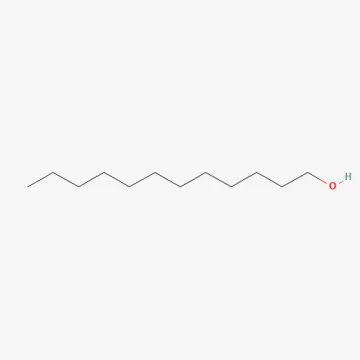
Dodecan-1-ol
Description
Mode of action
Dodecan-1-ol belongs to the fatty alcohol class, widely utilized in agriculture as a contact plant growth regulator. It acts by disrupting the cell membrane integrity of the plant tissues it touches.
The substance functions as a desiccant for young, tender plant parts. When applied, it dissolves the lipid layer of the cells, causing rapid dehydration and subsequent necrosis of the tissue.
It is non-systemic, meaning it does not translocate within the plant's vascular system. This property is crucial for protecting the main crop while targeting specific unwanted growth.
The visual impact of the treatment is typically observed within hours, as the affected vegetative parts shrivel and dry out completely under the influence of the chemical.
By preventing the development of unwanted vegetative organs, this substance allows the plant to redirect its energy resources towards the development of the main fruit or leaf crop.
What it targets
The primary use of dodecan-1-ol is the control of suckers (side shoots) in tobacco cultivation, a vital process for ensuring quality leaf production.
Beyond tobacco, it is employed as a precise tool for managing plant architecture, preventing the overgrowth of lateral shoots in various specialty crops.
It is specifically effective against soft, green, and rapidly growing tissues, while remaining harmless to the more mature, lignified parts of the plant stems.
The chemical control of suckers significantly improves the overall health of the field by enhancing airflow between plants, thereby reducing the risk of fungal infections.
This method offers an efficient alternative to labor-intensive manual pruning, making it a cornerstone of modern, mechanized agricultural practices.
Rates and timing
Application rates for dodecan-1-ol are determined by the growth stage of the crop and the density of the shoots requiring removal during the season.
Uniform coverage is essential for success. Application must be directed to ensure the spray reaches the leaf axils where the target growth is situated.
Environmental conditions play a significant role; treatments should be applied during dry weather to avoid dilution or run-off, which could reduce the treatment's efficacy.
The product is highly volatile and degrades quickly in the environment, which is beneficial for meeting safety standards regarding residue levels in harvested crops.
- Application temperature is ideal between 18°C and 28°C to ensure optimal contact activity.
- Avoid spraying during peak mid-day heat if high evaporation rates could impede proper coverage of the target tissues.
Restrictions
The major constraint of this product is its contact-only nature. Shoots sheltered by leaves may escape the treatment and require a second application or manual removal.
Operators must wear personal protective equipment, as the substance is a skin and eye irritant. Careful handling is required to prevent accidental exposure.
The chemical must be stored in a cool, well-ventilated area, safely away from heat sources and open flames, as it possesses flammable properties in its pure form.
Users should always conduct a small-scale compatibility test if they intend to mix dodecan-1-ol with other agricultural products or surfactants.
Excessive concentrations or improper spraying techniques can lead to phytotoxicity on the main leaves, therefore precise adherence to dosage instructions is mandatory.
Status in the European Union
Approved in the EU
- CAS number
- 112-53-8
- Approved from
- 01.09.2022
- Approval until
- 30.08.2037
- ADI
- Not appl.
- ARfD
- Not appl.
- AOEL
- Not appl.
EU status is for reference only and does not replace national registration in your country.