
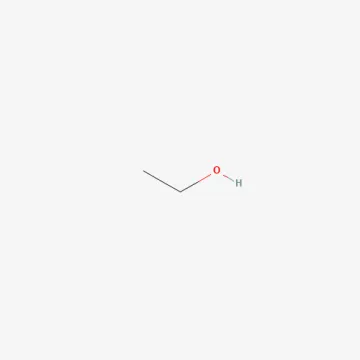
Ethanol
Description
Mode of action
Ethanol is utilized in the formulation of crop protection products primarily as a solvent and co-adjuvant. It serves to dissolve active ingredients that have low water solubility, ensuring they remain stable and uniformly dispersed within the spray solution.
By lowering the surface tension of the liquid, ethanol improves the wetting capacity of the spray. This allows droplets to spread more evenly across leaf surfaces, which is essential for uniform coverage and maximum contact with target pests or pathogens.
The substance also plays a role in modifying the physical properties of the plant cuticle. By temporarily softening the waxy layer of the leaf, ethanol enhances the permeability of the plant tissue, enabling faster uptake of systemic pesticides.
Ethanol facilitates rapid evaporation of the spray droplets, which leaves a concentrated deposit of the active ingredient on the plant surface. This process is crucial for increasing the bioavailability of the product shortly after application.
Furthermore, ethanol acts as a stabilizing agent within concentrated formulations, preventing the precipitation of active ingredients. This maintains the physical homogeneity of the chemical product during storage in varied climatic conditions.
What it targets
While ethanol itself is not a pesticide, its role as a formulation component is critical for the management of various agricultural threats. It is used to bolster the efficacy of herbicides, fungicides, and insecticides in high-input farming systems.
It is particularly effective when targeting weeds or pathogens that possess protective surface layers, such as thick waxes or hairy leaf surfaces. These barriers often impede the performance of standard water-based formulations.
The use of ethanol-containing adjuvants allows for more precise control over systemic pests and diseases. By improving penetration into plant vascular tissues, it ensures that systemic active ingredients reach their target sites more efficiently.
Incorporating ethanol can lead to more cost-effective crop protection programs. By increasing the efficacy of the active component, farmers can often optimize application rates, reducing the overall chemical load per hectare.
- Herbicidal control of resistant weed species in cereals.
- Systemic fungicide applications on high-value vegetable crops.
- Insecticide formulations designed for pests with protective cuticles.
Restrictions
The primary constraint when using ethanol-based formulations is the risk of phytotoxicity. If applied at incorrect concentrations or under stress conditions, the solvent can cause leaf scorching, particularly on young or tender plant growth.
Application should be avoided during periods of high temperature and intense sunlight. Rapid evaporation under these conditions can lead to the active ingredient crystallizing on the leaf surface, rendering it ineffective.
Compatibility with other tank-mix components must be thoroughly tested. Ethanol can interact unfavorably with certain surfactants or emulsifiers, potentially leading to instability, phase separation, or reduced performance of the spray solution.
Special attention is required during the flowering phase of crops. Excessive exposure to solvent-heavy applications can interfere with pollination processes and lead to decreased yields or damage to reproductive structures.
Safety protocols regarding flammable substances must be strictly followed when handling concentrated ethanol-containing products. Storage areas should be well-ventilated and kept away from heat sources or open flames.
Status in the European Union
Not approved in the EU
- CAS number
- 64-17-5
EU status is for reference only and does not replace national registration in your country.