
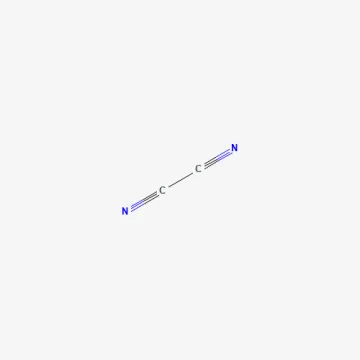
Ethanedinitrile
Description
Mode of action
Ethanedinitrile is a highly effective fumigant that transitions into a gaseous phase when introduced into the soil. Its mechanism of action is based on inhibiting the cellular respiration of organisms, which leads to the rapid death of harmful targets upon contact with the active substance.
The gaseous form allows the substance to penetrate deeply into soil pores, ensuring uniform distribution throughout the treated volume. Due to its high volatility, the preparation affects not only the surface layers but also deep-seated forms of pathogens.
After the exposure period, the substance actively decomposes in the soil environment, which reduces the risk of residues accumulating in subsequent harvests. The efficiency of the process directly depends on the quality of soil sealing, usually achieved using specialized polyethylene film.
The product exhibits selectivity through the method of application, acting on a wide spectrum of biological targets in the root zone of future plants. This process creates a favorable phytosanitary environment for rapid crop establishment.
An important aspect is the high diffusion rate of ethanedinitrile molecules, which allows for shorter waiting periods before sowing or planting operations compared to traditional disinfection methods.
What it targets
The main purpose of ethanedinitrile is to suppress soil pests, including nematode species that are critically dangerous to agronomy.
The preparation is successfully used to control soil-borne pathogenic fungi that cause root rot and wilting of agricultural plants.
The product possesses a pronounced herbicidal effect against seeds of many weed species that are in a dormant state within the soil profile.
The application of ethanedinitrile is also effective against soil-dwelling insects capable of damaging seedlings and the root systems of young plants.
Its comprehensive impact makes it an indispensable tool for growing crops in conditions with a high infectious and invasive soil background.
Rates and timing
Application rates for the product vary depending on the soil type, its mechanical composition, moisture levels, and the species composition of the target pests.
Typically, application is carried out via soil injection to a depth of 20–40 cm, followed by immediate coverage of the area with gas-impermeable film.
Waiting periods before planting are strictly regulated and usually range from 7 to 14 days to ensure the complete evaporation of the fumigant from the soil.
It is recommended to perform the treatment under optimal soil moisture conditions, as excessively dry substrate may hinder the proper distribution of the gas.
Precise dosage is determined by specialists based on field analysis of the phytosanitary status of a specific plot of land.
Restrictions
Working with ethanedinitrile requires strict adherence to safety measures due to the product's high toxicity in its gaseous phase to warm-blooded organisms.
The use of respiratory and skin personal protective equipment (PPE) is mandatory during all fumigation operations regardless of their scale.
It is strictly forbidden to remain on the treated area without protective gear until all vapors of the substance have completely dissipated from the soil.
The use of the preparation must be excluded in the vicinity of residential buildings, water bodies, or areas with high pedestrian and animal traffic.
Monitoring the integrity of the covering after the product's application is a critical factor in preventing the loss of the fumigant into the atmosphere.
Status in the European Union
Not approved in the EU
EU status is for reference only and does not replace national registration in your country.