
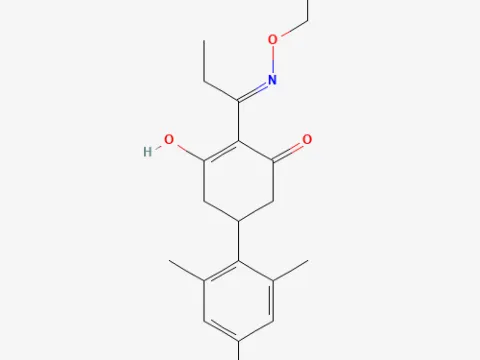
Tralkoxydim
Tralkoxydim belongs to the cyclohexanedione chemical family. It is a highly selective systemic herbicide specifically designed to control annual grass weeds.
What the section contains
Tralkoxydim
The active ingredient is absorbed primarily through the leaves of the weeds. Once absorbed, it moves systemically via the phloem to the actively growing meristematic tissues.
The primary mode of action is the inhibition of the enzyme acetyl-CoA carboxylase (ACCase). This enzyme is essential for the biosynthesis of fatty acids in plants.
The inhibition leads to a cessation of cell division and structural damage to cell membranes. As a result, the growth of the weed stops almost immediately after treatment.
Symptoms of herbicide efficacy, such as chlorosis and necrosis, become visible within a week. Complete control of the target weeds is typically achieved within three weeks.
This herbicide is targeted exclusively at various annual grass weeds that compete with cereal crops. It is widely recognized for its effectiveness against hard-to-control species.
Key weeds controlled include Wild oat (Avena fatua), Black-grass (Alopecurus myosuroides), and various species of Foxtail and Barnyard grass.
Tralkoxydim has no effect on broad-leaved weeds. Therefore, it is frequently applied in combination with broadleaf herbicides to achieve a full-spectrum weed control program.
It is specifically registered for use on wheat and barley. Due to its selectivity, it provides excellent safety for these crops while maintaining high efficacy against the grass competitors.
- Wild oat (Avena fatua)
- Black-grass (Alopecurus myosuroides)
- Foxtail (Setaria spp.)
- Barnyard grass (Echinochloa crus-galli)
Application rates are determined by the weed growth stage and the density of the infestation. Best results are achieved when applied during the early vegetative growth stages of weeds.
The addition of appropriate adjuvants is recommended to maximize leaf retention and penetration. This is crucial given the narrow, vertical structure of grass weed foliage.
The spray volume should be calibrated to ensure uniform coverage without runoff. Improper application may lead to reduced herbicide uptake and survival of resilient weeds.
Environmental conditions such as temperature and humidity influence the metabolic rate of the weed, affecting herbicide performance. Avoid spraying during extreme heat or drought stress.
It is advisable to check local guidelines for specific tank-mix compatibility. Always follow the instructions provided by the manufacturer regarding water volume and mixing procedures.
Usage is strictly restricted to approved cereal crops. Application on sensitive crops like legumes or oilseeds will cause significant injury and potential crop failure.
Drift management is essential when applying this product. Ensure that weather conditions are suitable to prevent the chemical from moving off-target to neighboring fields.
Operators must wear appropriate personal protective equipment (PPE) during handling and application. Avoid inhalation of spray mists and direct skin contact with the chemical.
Storage must be in a secure, dry place, away from food and animal feed. Containers should be kept tightly closed to prevent leakage and environmental contamination.
Disposal of empty containers and excess spray solution must comply with local environmental regulations. Never pour leftovers into drains or natural water sources.