
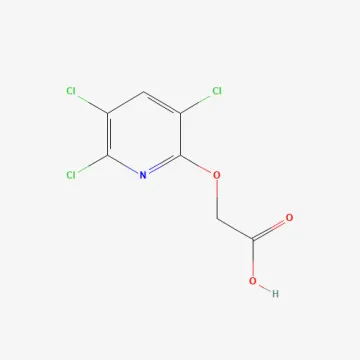
Triclopyr
Description
Mode of action
Triclopyr is a systemic herbicide belonging to the pyridine carboxylic acid class. It is primarily used to control woody plants and broadleaf weeds by mimicking the growth hormone auxin.
Once applied, the substance is rapidly absorbed by the plant foliage and translocated through the vascular system to the meristematic tissues. This leads to rapid and uncontrolled growth, eventually causing the plant to collapse.
The herbicide interferes with the plant's metabolic processes, resulting in the distortion of leaves and stems, cracking of the bark, and failure of the internal transport system.
Triclopyr is highly effective because it travels deep into the root system, preventing the target plants from resprouting after the initial treatment.
The time to efficacy varies, but active symptoms of the herbicide's impact are generally visible within 24 to 48 hours, depending on the plant species and environmental conditions.
What it targets
Triclopyr is widely utilized for the management of hard-to-control woody species and perennial broadleaf weeds. It is a staple in vegetation management programs on non-crop lands.
It is specifically valued for its ability to clear brush and unwanted trees, such as alder, ash, and willow, along utility rights-of-way, roadsides, and in forestry operations.
In agricultural settings, it is commonly used on pastures and meadows to suppress invasive weeds while leaving grasses unaffected, which is critical for maintaining livestock forage quality.
It is also effective against invasive plant species, including several types of vine weeds and shrubs that are resistant to other common hormonal herbicides like 2,4-D.
- Woody brush and shrubs
- Perennial broadleaf weeds
- Invasive vine species
- Stump treatment applications
Rates and timing
Application rates for triclopyr depend heavily on the target vegetation. Woody species require higher concentrations, often applied as basal bark or cut-stump treatments.
For herbaceous weeds on rangelands, lower doses are typically applied via boom sprayers to ensure uniform coverage without damaging the underlying grass cover.
The best timing for application is during the peak growing season, when the plant is actively transporting nutrients and water, allowing the herbicide to reach all parts of the plant efficiently.
Some formulations are designed to be mixed with surfactants or crop oil concentrates to improve penetration through thick, waxy leaf surfaces or woody bark.
Consult the specific product label for regional restrictions and exact dosage requirements, as these can vary based on local climatic conditions and soil types.
Restrictions
The greatest risk associated with triclopyr is drift onto sensitive crops. It is highly phytotoxic to non-target plants, especially grapes, fruit trees, and various vegetable species.
Applications must be avoided during windy conditions. Drift control agents should be utilized when spraying in areas adjacent to sensitive vegetation to minimize the risk of damage.
Triclopyr should not be applied near open water sources to prevent contamination, as it may be harmful to aquatic ecosystems if concentrations exceed safety thresholds.
Personal protective equipment (PPE) is essential for applicators. Direct contact with skin and eyes should be prevented, and standard handling procedures for pesticides must be followed at all times.
Storage of the product should be in a cool, dry area away from food and feed, and all empty containers should be triple-rinsed and disposed of according to local environmental regulations.
Status in the European Union
Approved in the EU
- CAS number
- 55335-06-3
- Category (EU)
- HB - Herbicide
- Approved from
- 01.06.2007
- Approval until
- 31.03.2027
- ADI
- 0.03 mg/kg bw/day
- ARfD
- 0.3 mg/kg bw
- AOEL
- 0.05 mg/kg bw/day
EU status is for reference only and does not replace national registration in your country.