
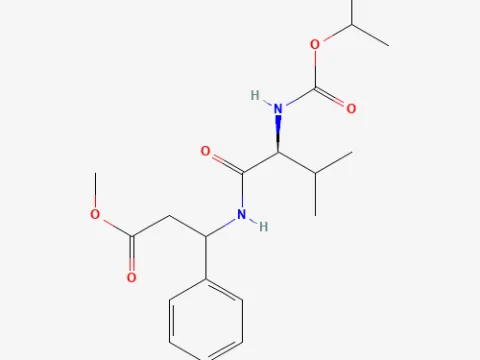
Valifenalate
Valifenalate belongs to the carboxylic acid amide (valeroamide) chemical class. It is a systemic active ingredient with preventive, curative, and antisporulant properties.
What the section contains
Valifenalate
The mode of action involves the specific inhibition of mycelial growth and the prevention of pathogen spore formation. The substance disrupts the fungus's metabolism at a cellular level, leading to the rapid elimination of the parasite.
Due to its chemical structure, valifenalate penetrates plant tissues rapidly, ensuring prolonged protection even for areas not directly covered by the spray solution.
This substance exhibits excellent adhesion properties and high resistance to wash-off by precipitation, which is critical during periods of unstable weather.
Valifenalate is frequently used in formulated mixtures, preventing the development of resistance in pathogens through synergistic effects with other active compounds.
The primary use of valifenalate is the control of diseases caused by oomycetes, including downy mildew (peronospora) and late blight (phytophthora).
Products based on valifenalate are most effective for protecting solanaceous crops, such as tomatoes and potatoes, against late blight and early blight.
Additionally, the substance is successfully applied to cucurbitaceous vegetables (cucumbers, squashes) to control a range of diseases caused by pathogenic fungi.
The efficacy of the product is observed at all growth stages of the plant, from the seedling period through to active fruit development.
The preparation effectively restricts infection development in high-humidity conditions, where the risk of fungal disease outbreaks increases significantly.
Application rates vary depending on the specific product formulation and the level of infection on the plot, requiring strict adherence to the manufacturer's instructions.
Spraying is recommended during the vegetative stage at the first signs of disease or for preventive purposes when weather conditions favor pathogen development.
The frequency of seasonal applications is typically limited to prevent the accumulation of residues in the final produce and to reduce the ecological impact.
To ensure maximum effect, the working solution must uniformly cover the entire leaf surface, including the undersides of the leaves.
The interval between treatments typically ranges from 7 to 14 days, depending on the rate of vegetative growth and the current infectious pressure on the field.
Valifenalate requires strict adherence to safety protocols: the use of personal protective equipment for skin and respiratory protection is mandatory during handling.
Discharge of the product into open water bodies and drinking water sources is prohibited, as the substance can pose risks to aquatic organisms.
Pre-harvest intervals (PHI) must be strictly observed to ensure the safety of fruits for consumers.
Storage must be carried out in a dry, cool area away from direct sunlight, kept inaccessible to children and animals.
When used in tank mixes, a physical compatibility test should be performed to prevent precipitation or loss of efficacy.