
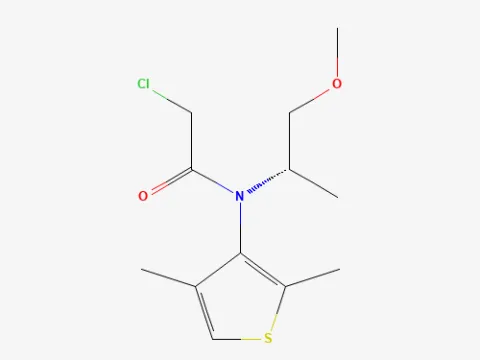
Dimethenamid-P
Dimethenamid-P belongs to the chloroacetamide chemical class. It is a highly effective active ingredient that exhibits systemic activity and is absorbed primarily by weed seedlings during their germination process.
What the section contains
Dimethenamid-P
The mechanism of action is based on blocking cell division, which leads to the suppression of meristematic tissue growth. The substance disrupts protein and lipid metabolism, making normal development of the weed embryo impossible.
A key advantage of this molecule is its high mobility in the topsoil, allowing it to create a protective screen even under limited moisture conditions. This provides long-term control over subsequent flushes of weeds.
The active ingredient interferes with key plant enzymes, preventing the synthesis of chlorophyll and carotenoids. This leads to the rapid death of weed plants even before they emerge on the soil surface.
An important characteristic is the high selectivity of the preparation. Due to metabolic inactivation within the protected crop, the herbicide does not show phytotoxic effects on the main field crops.
The product effectively controls most species of annual grasses and some broadleaf weeds. Its spectrum includes harmful plants such as barnyard grass, as well as various types of foxtail and crabgrass.
Among broadleaf weeds, the herbicide shows activity against pigweed, some knotweed species, and lamb's quarters. However, it is less effective against perennial weeds with well-developed root systems.
The use of this herbicide is relevant for crops such as corn, soybeans, sunflowers, and sugar beets. It is essential in intensive cultivation programs to prevent competition for nutrients during the early stages of plant growth.
Maximum efficacy is achieved when applied before crop emergence. The soil must be well-prepared to ensure a uniform distribution of the herbicidal film across the field.
Biological performance is directly dependent on the quality of seedbed preparation. The absence of large soil clods helps create a stable protective layer that weed seedlings cannot penetrate.
Application rates vary depending on soil type and the weed infestation level of the field. Light sandy soils require minimum doses, while heavy soils rich in clay require higher rates for a stable result.
The herbicide can be applied pre-sowing with incorporation or pre-emergence of the crop. For pre-emergence application, it is crucial to ensure sufficient soil moisture to activate the active substance.
Optimal timing is tied to the weed phenology: the product must be in the soil before weed seeds germinate. Post-emergence application is possible but less effective because the herbicide has little impact on established weeds.
When creating tank mixes, compatibility with other pesticides must be considered. It is often combined with terbuthylazine-based herbicides to broaden the spectrum of control against broadleaf weeds.
Following the manufacturer's instructions strictly allows for avoiding crop phytotoxicity. When used according to the guidelines, the product ensures field cleanliness for 6–8 weeks after application.
The main limitation is the dependence of efficacy on soil moisture. Severe drought immediately after application can reduce the product's activity by limiting its distribution in the root zone.
It is not recommended to apply the herbicide on soils with very high organic matter content, as it actively adsorbs the active ingredient, reducing its availability to weeds.
An important requirement is compliance with safety measures when working with the preparation. The agronomist must use personal protective equipment to prevent the concentrate from contacting skin and mucous membranes.
There are restrictions regarding crop rotation: under correct usage, the herbicide degrades completely by the next season. However, in case of replanting a crop due to seedling failure, one should consult the product's specific regulations.
Spraying is prohibited under windy conditions to prevent the drift of the working solution onto neighboring agricultural lands or infrastructure.