
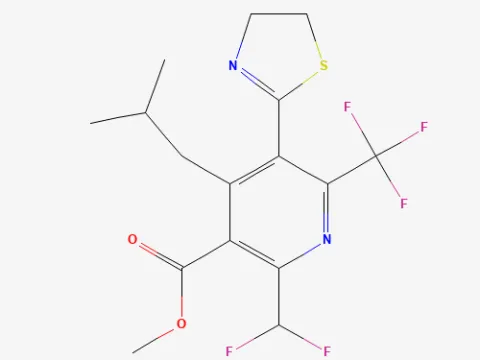
Thiazopyr
Thiazopyr belongs to the pyridine chemical class of herbicides. Its primary mode of action involves the inhibition of cell division within the meristematic tissues of plants, which results in the cessation of root and shoot development in susceptible weeds.
What the section contains
Thiazopyr
This substance exhibits high selectivity, acting primarily through the soil. It is absorbed by the root systems of germinating weeds, where it prevents the formation of microtubules—a vital process for the growth and development of the seedling.
Thiazopyr is characterized by a significant residual effect. It remains biologically active in the soil layer for an extended period, allowing it to provide ongoing control against multiple flushes of germinating weeds throughout the season.
The compound is primarily used for pre-emergence application. It effectively prevents seed germination and seedling establishment but has limited impact on weeds that have already reached a developed vegetative stage.
Crop safety is achieved through the metabolic breakdown of the active ingredient within the tolerant plant tissues. This makes it a reliable tool for protecting crops without causing adverse effects on their overall health and development.
Thiazopyr is highly effective in controlling a wide spectrum of annual grass weeds and certain broadleaf species. It is a vital component of weed management programs where early-season competition must be minimized.
Key weed species sensitive to thiazopyr treatment include:
- Foxtail (various species)
- Barnyardgrass
- Crabgrass
- Amaranth
- Common lambsquarters
By effectively suppressing these weeds during the critical early stages of crop growth, thiazopyr ensures that the crop can establish its root system without competing for essential nutrients, water, and sunlight.
The efficacy of the herbicide remains consistent across varying soil types and environmental conditions, providing growers with a dependable solution for their weed control strategies.
Thiazopyr is an excellent choice for integrated weed management systems. Its unique mode of action against cell division helps prevent the development of resistance in weed populations that are otherwise adapted to traditional herbicides.
The application rates for thiazopyr depend on factors such as soil texture, organic matter content, and the expected weed pressure. Proper calibration is essential to achieve the desired concentration in the topsoil layer.
It is typically applied pre-planting or post-planting but before the crop emerges. Uniform coverage of the soil surface is required to create a consistent herbicide barrier that protects the area from germinating weed seeds.
Adequate soil moisture is necessary for the activation of the herbicide. Rainfall or irrigation following application helps to incorporate the active ingredient into the zone where weed germination occurs.
Growers should strictly adhere to the label recommendations regarding application rates, as excessive dosages might cause phytotoxicity, especially in soils with very low organic matter content.
Timing the application in accordance with the specific crop's growth cycle and the local weed emergence patterns is key to achieving optimal results and maintaining long-term weed control efficacy.
Safety is a priority when handling thiazopyr. Personnel must use appropriate personal protective equipment (PPE), including respirators, gloves, and protective clothing, to avoid any exposure during preparation and application.
Preventing spray drift is critical, especially when nearby fields contain sensitive crops. Applications should be performed during low wind conditions using appropriate nozzles to ensure precise targeting of the soil surface.
Thiazopyr must be kept away from aquatic environments, as it can be harmful to fish and other aquatic organisms. Proper management of rinsing water and container disposal is mandatory to prevent environmental contamination.
Storage should take place in a secure, climate-controlled facility away from food, animal feed, and water sources to maintain chemical stability and ensure overall site safety.
Environmental monitoring is recommended, as heavy rainfall shortly after application can lead to the leaching of the compound into deeper soil layers, potentially reducing the duration of weed control at the surface.