
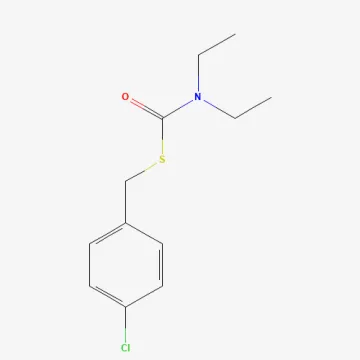
Thiobencarb
Description
Mode of action
Thiobencarb is a systemic herbicide belonging to the thiocarbamate chemical class, primarily used for weed control in flooded rice cultivation.
The substance works by inhibiting lipid and protein synthesis in the meristematic tissues of target plants, effectively stopping cell division.
It is absorbed by the roots and germinating shoots of weeds, preventing the emergence of seedlings and ensuring a clean start for the rice crop.
The chemical exhibits excellent soil mobility in the presence of water, creating a consistent barrier against emerging weeds within the top soil layer.
Its selective nature allows it to target invasive grasses while sparing rice plants, provided that the application guidelines are strictly followed.
What it targets
The primary focus of thiobencarb is the eradication of annual grass weeds that compete with rice for water, sunlight, and soil nutrients.
The most susceptible weeds include various species of barnyard grass (Echinochloa), which are notorious for their aggressive growth in rice fields.
In addition to grasses, thiobencarb provides partial control over certain sedge species that thrive in the aquatic environment of paddy fields.
It is crucial to note that the product is effective primarily against germinating seeds and early-stage weed seedlings rather than established perennial plants.
By controlling these weeds early, farmers can significantly increase rice yields and reduce the need for mechanical weeding operations.
Rates and timing
Application rates for thiobencarb depend on the specific formulation (liquid or granular), soil texture, and the irrigation management strategy utilized.
The herbicide is typically applied by spraying directly into the floodwater or by distributing granules uniformly across the treated area.
Timing is critical: application should occur from pre-emergence up to the 2-3 leaf stage of the rice crop to maximize weed control while maintaining crop safety.
Successful control depends on maintaining the required water level in the rice paddy for at least 5-7 days following the application.
- Ensure even distribution to prevent gaps in control.
- Avoid application during heat stress to ensure optimal selectivity for the crop.
Restrictions
Safety is a priority when handling thiobencarb, as it requires strict adherence to personal protective equipment standards to prevent inhalation or skin contact.
Environmental precautions must be strictly followed; drainage of water from treated paddies into public waterways is prohibited until the safety period expires.
Over-application can lead to phytotoxicity in rice, manifesting as stunted growth or chlorosis, particularly if the crop is already under environmental stress.
Storage of the chemical must be in a secure, dry, and well-ventilated facility, away from food, feed, and water sources to avoid cross-contamination.
All application equipment must be calibrated regularly and cleaned thoroughly after use to maintain operational efficiency and environmental safety.
Status in the European Union
Not approved in the EU
- CAS number
- 28249-77-6
- Category (EU)
- HB - Herbicide
EU status is for reference only and does not replace national registration in your country.