
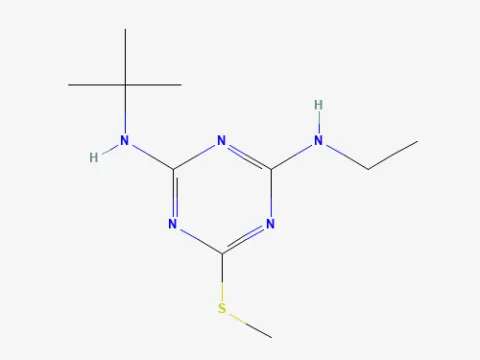
Terbutryn
Terbutryn belongs to the chemical class of symmetric triazines. It is a systemic active ingredient that is absorbed primarily through the root system, although it can also be taken up by leaves when applied post-emergence.
What the section contains
Terbutryn
The primary mode of action involves the inhibition of photosynthesis. The substance blocks the electron transport chain in photosystem II, which leads to the disruption of vital physiological processes and the eventual death of target weeds.
When applied to the soil, terbutryn provides residual activity, creating a protective barrier that inhibits the germination of new weed seeds. The persistence of the substance in the soil depends on the soil type, moisture content, and organic matter levels.
The herbicide is characterized by its selectivity for certain crops. These crops possess the biochemical capacity to metabolize the active ingredient into non-toxic compounds, ensuring the crop remains unaffected while weeds are controlled.
The speed of herbicidal activity is influenced by weather conditions. In periods of active growth and adequate soil moisture, the visual symptoms of chlorosis and necrosis in weeds appear significantly faster.
Terbutryn is used to control a broad spectrum of annual broadleaf weeds and certain grasses. It is particularly effective against species such as Amaranthus, Chenopodium album, Polygonum, and Capsella bursa-pastoris.
The substance is frequently utilized in tank mixtures to enhance the efficacy of other herbicides. This practice allows for a broader spectrum of weed control and helps in managing resistance issues within integrated weed management programs.
Application rates are determined by soil composition and the expected weed pressure. Soils with high organic matter content generally require higher application rates to achieve the desired level of control.
Effective weed management is achieved by applying the herbicide either pre-emergence or at the very early stages of weed development. Uniform application over the field surface is critical for maintaining consistent herbicidal coverage.
An important limitation is the adherence to crop rotation guidelines, as residual amounts of terbutryn in the soil can potentially impact sensitive follow-up crops. Growers must follow regional regulations regarding safe rotation intervals.
Drift management is essential; spraying should be avoided under high wind conditions to prevent the herbicide from affecting adjacent non-target fields. Contamination of water sources must be avoided due to the toxicity of the chemical to aquatic organisms.
Operators must wear appropriate personal protective equipment, including respirators and protective clothing. After application, equipment must be cleaned thoroughly, and re-entry intervals into the treated fields must be strictly observed.