
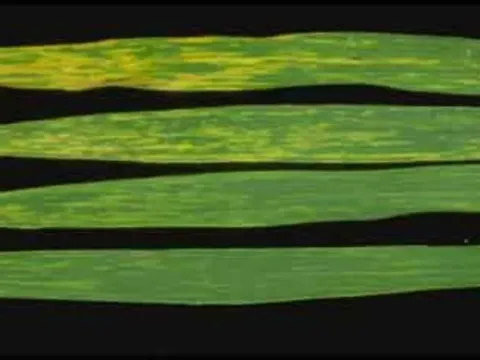
Wheat spindle streak mosaic virus
Wheat spindle
Wheat spindle streak mosaic virus (WSSMV) is a pathogen belonging to the genus Bymovirus within the Potyviridae family. It is a single-stranded RNA virus known for its persistence in the soil environment.
What the section contains
Wheat spindle streak mosaic virus
The virus is transmitted by the soil-borne plasmodiophorid Polymyxa graminis. This fungus-like organism infects plant roots, injecting the virus into the vascular tissues where it begins systemic propagation.
Transmission does not occur through seeds or direct mechanical contact between plants; it is exclusively dependent on the presence and activity of its vector in the soil matrix.
The virus particles are highly stable within the resting spores of Polymyxa graminis, which can survive in field soil for several years, ensuring long-term infection potential.
Taxonomically, it is related to other soil-borne cereal viruses, often leading to complex, mixed viral infections that can complicate field diagnosis and long-term control strategies.
Winter wheat is the primary host, with winter barley being susceptible as well. The disease causes significant yield losses, particularly in temperate regions with mild, wet winters.
The infection disrupts the plant's metabolic processes and photosynthetic capacity, leading to stunted growth and reduced vegetative biomass. Depending on the cultivar, yield reduction ranges from 5 to 30 percent.
Infected crops exhibit poor tillering and an overall uneven stand. The resulting ears are often small, poorly filled, or completely barren, directly impacting the final grain harvest.
Beyond the viral damage, the root infection by Polymyxa graminis places additional stress on the plant, making it more susceptible to environmental extremes and secondary pathogens.
Economic impact is high in areas where short-rotation sequences are used, necessitating a shift in cropping practices to mitigate the risk of infection buildup.
Symptoms are most visible during the early spring as the crop resumes growth. The optimal temperature range for the appearance of viral symptoms is between 5 and 15 degrees Celsius.
Primary infection occurs in the autumn at the seedling stage when roots are actively growing. However, external symptoms are rarely visible during the cold winter months.
The transmission is highly dependent on wet soil conditions, which facilitate the movement of Polymyxa graminis zoospores towards the roots of young wheat plants.
As soil and air temperatures rise above 20 degrees Celsius, the symptoms often fade or disappear from new growth, as the viral replication rate within the host plant decreases.
The disease is therefore considered a seasonal phenomenon that mainly affects winter cereals in early spring, requiring timely monitoring before temperatures increase.
Initial infection manifests as chlorotic spots that elongate into characteristic spindle-shaped streaks running parallel to the leaf veins.
As the disease progresses, a mosaic pattern develops across the entire leaf surface, accompanied by a noticeable yellowing of the foliage.
Affected plants are typically stunted and possess a compact, "dwarfed" appearance compared to healthy plants growing under the same field conditions.
In cases of high disease pressure, the field appears patchy with discolored and stunted areas, which are easily identifiable when viewed from an elevated position.
A key diagnostic trait is the gradual disappearance of symptoms with the onset of warm weather, a characteristic that differentiates it from several other cereal mosaic diseases.
The most effective strategy for managing WSSMV is the selection and planting of resistant or tolerant wheat cultivars that suppress virus multiplication.
Crop rotation remains a crucial management practice. Avoiding the cultivation of winter wheat on infested fields for a period of 3 to 5 years helps deplete the viral inoculum in the soil.
Improving soil drainage is essential, as saturated, waterlogged soil conditions are required for the lifecycle and movement of the vector, Polymyxa graminis.
Delaying the sowing date of winter wheat can minimize the overlap between the seedling stage and the peak activity period of the vector in the autumn.
Since no direct chemical treatment is available for viral infections, management focuses entirely on integrated practices including sanitation, resistant varieties, and soil moisture control.