
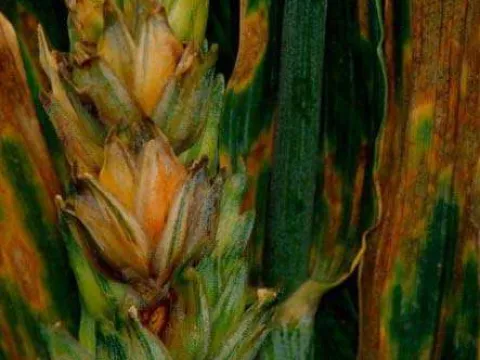
Wheat seed gall nematode
European wheat
The wheat seed gall nematode, Anguina tritici, is a highly specialized plant-parasitic nematode belonging to the family Anguinidae. It is recognized as one of the oldest known plant parasitic nematodes.
What the section contains
Wheat seed gall nematode
The nematode has a unique biological adaptation: its infective juveniles can enter a state of cryptobiosis (anhydrobiosis) within dried seed galls, allowing them to remain viable for several years.
The life cycle begins when infested seeds are planted. The nematodes emerge, move upward along the plant's surface in a film of water, and invade the developing floral primordia.
They induce the formation of galls, which replace the healthy grains. Inside these galls, the nematodes mature, mate, and produce thousands of eggs, which then hatch into a new generation of infective larvae.
Environmental conditions characterized by high humidity and moderate temperatures during the germination phase are optimal for the nematode to infest the wheat seedlings successfully.
Anguina tritici primarily affects wheat crops, though it may occasionally infest rye. The damage is directly related to the destruction of the grain and the loss of overall biomass.
The disease caused by this nematode is commonly known as "ear cockle" or "wheat cockle." Healthy kernels are replaced by dark, hard, galled structures that resemble small, distorted seeds.
Infested plants exhibit severe symptoms such as dwarfing, curling of leaves, and increased tillering, which eventually leads to a significant reduction in the expected grain yield.
In addition to yield loss, the presence of galls in the harvested grain reduces the market value and makes the batch unsuitable for milling or human consumption.
Secondary damage often occurs because the necrotic and deformed tissues created by the nematode attract various secondary bacteria and fungi, further damaging the crop's health.
Early identification of the infestation is marked by leaf twisting, kinking of the stems, and a general stunted appearance of the wheat plants during the vegetative stage.
During the heading and flowering stage, the most diagnostic sign is the open appearance of the glumes, which expose the dark, hard galls instead of healthy, plump grain.
Upon closer inspection, the galls themselves appear as dark brown or black, hard, and lightweight bodies that contrast sharply with the normal wheat grain shape.
If the galls are crushed, a whitish mass of thousands of larvae may be visible under low-magnification microscopy, confirming the presence of the parasite.
In fields with high infection pressure, the entire stand of wheat can look ragged and irregular, with many plants failing to produce any marketable seed at all.
The primary control measure is the use of high-quality, nematode-free seed. Modern seed-cleaning technology is highly effective at separating the lighter galls from healthy grain.
Crop rotation is an essential management practice. Since the nematodes have a limited lifespan in the soil without a host, planting non-host crops for two or three years significantly lowers the population.
Deep plowing and proper soil management help to bury infested stubble and plant debris, making it difficult for the nematodes to emerge and reach the soil surface.
- Brine flotation method to separate infected seeds from clean ones.
- Rigorous monitoring and quarantine of seed lots from known infested areas.
- Avoidance of continuous wheat cropping in fields where the pathogen was previously identified.
Integrated pest management strategies focusing on sanitation and strict seed selection are currently the most reliable ways to keep the wheat seed gall nematode under control.