
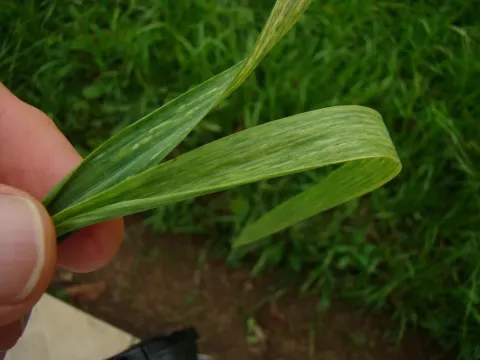
Wheat soil-borne mosaic virus
Wheat soilborne
The causative agent of the disease is the Wheat soil-borne mosaic virus (WSBMV), a member of the Furovirus genus. It is a rod-shaped, RNA-containing virus that does not spread mechanically but requires a biological vector for successful transmission.
What the section contains
Wheat soil-borne mosaic virus
The specific vector for this virus is Polymyxa graminis, an obligate soil-dwelling parasite (plasmodiophorid). Its zoospores carry the virus and infect wheat roots, releasing the virus particles into the host cells upon contact.
The virus exhibits remarkable stability within the soil environment. The resting spores (cystosori) of the vector can remain infectious in the soil for many years, making the virus extremely difficult to eradicate once it is established in a field.
Taxonomically, the virus is classified as a soil-borne plant pathogen, and its epidemiology is inextricably linked to the biological cycle of the Polymyxa graminis vector.
Field spread is primarily facilitated by the movement of infested soil particles, often moved by farm equipment, water runoff, or wind erosion across agricultural lands.
The primary hosts of this virus are winter wheat and winter barley. The infection causes systemic disease, which significantly impairs the plant's physiological processes, leading to stunted growth and reduced crop yields.
Symptoms often appear in patches within the field, reflecting the distribution of the vector in the soil. Infected plants show reduced tillering, which directly results in lower stand density and poorer yield performance.
In severely affected fields, grain filling is poor, and many spikes may be sterile or contain shriveled grains, leading to a substantial decrease in the total harvested weight and grain quality.
The economic impact is particularly severe in years with cool, wet springs, where yield losses can range from 10% to 50% depending on the susceptibility of the cultivar and the infection pressure.
The damage is compounded by the fact that infected root systems are less efficient at water and nutrient uptake, making the plants more susceptible to secondary stresses like drought or nutrient deficiencies.
Initial infection occurs during the autumn months when soil temperatures range between +10°C and +15°C, providing the optimal environment for Polymyxa graminis zoospore activity.
Disease symptoms usually become clearly visible in the early spring, immediately following the resumption of plant growth, triggered by cool and humid weather conditions.
As average temperatures rise above +20°C, the expression of mosaic symptoms on the leaves tends to diminish or disappear, even though the virus is still present within the plant tissue.
The prevalence of the disease is highly correlated with seasonal moisture. Years with high precipitation levels in autumn and spring favor the widespread dissemination of the viral vector in the soil.
The phenological stage of the winter cereal is crucial, as the infection risk is highest during the early seedling stages, particularly when the root system is actively developing.
The hallmark of the disease is the presence of chlorotic spots, streaks, or stripes on the foliage, which often coalesce to form a mosaic pattern on the leaves of infected plants.
Plants affected by the virus display pronounced stunting, creating a characteristic uneven appearance in the field compared to the uniform growth of healthy winter wheat.
Leaf discoloration can vary from pale green to yellow, and in severe cases, the foliage may exhibit signs of necrosis or deformation, reflecting the systemic nature of the viral infection.
Field inspection reveals irregular, stunted patches of yellowed plants. These patches often expand in size over time if environmental conditions are favorable for the vector.
- Mosaic leaf patterns (streaks/stripes)
- Stunted plant growth (dwarfing)
- Reduced tiller development
- Poor grain quality and sterility
- Patchy distribution in the field
The deployment of resistant cultivars is the primary and most effective management strategy, as these varieties either resist viral replication or limit the vector's infection capacity.
Implementing long-term crop rotation is essential to reduce the population of Polymyxa graminis in the soil, although the longevity of resting spores makes this a slow process.
Adjusting planting dates to avoid the peak activity periods of the vector during the autumn can help minimize the incidence of initial infection in the seedling root zone.
Sanitation practices, such as cleaning farm machinery to prevent the movement of infested soil between fields, are critical for stopping the geographical spread of the pathogen.
Effective weed control is advised, as certain grassy weeds can serve as alternative hosts, maintaining the virus and the vector population even in the absence of the wheat crop.