
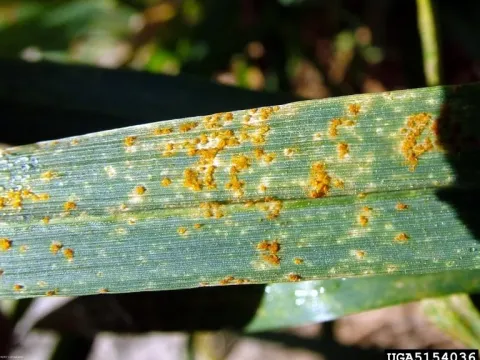
Wheat leaf rust
Puccinia rubigo-vera
Wheat leaf rust is caused by the fungus Puccinia triticina (formerly known as Puccinia rubigo-vera). It is a highly specialized obligate parasite belonging to the Basidiomycota division, which requires living host tissue to complete its life cycle.
What the section contains
Wheat leaf rust
The fungus is characterized by its distinct spore stages. Urediniospores are the primary agents of secondary infection, capable of spreading rapidly through wind dispersal and causing multiple cycles of infection within a single growing season.
The pathogen thrives in cool to moderate temperatures (15–25°C) and requires high humidity or leaf wetness to germinate and penetrate the wheat leaf stomata. The latent period can be as short as one week under optimal environmental conditions.
Genetic diversity within Puccinia triticina populations is high. The emergence of new physiological races is a common problem, often leading to the breakdown of resistance in previously tolerant wheat cultivars.
The fungus primarily survives between growing seasons in the form of mycelia on volunteer wheat plants or winter cereal crops, acting as a green bridge for the next infection cycle.
The primary host for this pathogen is bread wheat (Triticum aestivum) and durum wheat. Certain wild grasses also serve as alternative hosts, contributing to the survival and spread of the disease.
The infection targets the leaves, where the pathogen colonizes the mesophyll tissue. Severe cases may result in infection of leaf sheaths, but the pathogen rarely moves to the heads or glumes of the wheat plant.
Damage results from the destruction of photosynthetic tissue. As the fungus consumes nutrients and disrupts water balance, the plant loses its ability to produce carbohydrates, leading to reduced grain filling.
Yield losses can be significant, ranging from 10% to 50% in susceptible varieties. Early-onset infections during the boot stage are particularly damaging, as they severely limit the plant's yield potential.
Beyond quantity, grain quality is also compromised. Affected crops often produce shriveled grain with lower test weight, reduced protein content, and poor baking quality, resulting in significant economic losses for producers.
The first symptoms appear as small, round to oval, bright orange-brown uredinia (pustules) scattered randomly on the upper surface of the leaf blades. These pustules contain masses of urediniospores.
As the infection progresses, the pustules rupture the epidermis, releasing the characteristic rusty-colored dust. Chlorosis and necrosis surround the pustules as the leaf tissue dies off due to extensive fungal growth.
Toward the end of the season, or as the plant approaches maturity, the fungus may transition to the telial stage. This produces dark brown to black, shiny, sub-epidermal pustules (telia) on the leaves.
Identification is confirmed by the presence of the rust-colored spore mass, which easily rubs off on clothing or fingers. This visual evidence distinguishes leaf rust from other fungal diseases like Septoria or Tan Spot.
- Scattered orange-brown pustules on the upper leaf surface.
- Yellowing and necrosis of infected leaf tissues.
- Rapid drying of lower leaves in the canopy.
- Formation of dark black pustules in late summer.
Cultural practices are essential for management, starting with the elimination of volunteer wheat plants. Controlling these "green bridges" reduces the initial inoculum available for early autumn infection.
Planting resistant wheat varieties is the most effective and sustainable strategy. Breeders continuously work to incorporate new resistance genes, though farmers should use a mix of cultivars to manage the risk of race evolution.
Chemical control via fungicides is recommended when the disease threshold is met. Applications of systemic fungicides, such as triazoles or strobilurins, provide both protectant and curative action against rust.
Monitoring the crop for the first signs of rust is crucial. Preventive spraying during the stem elongation or booting phases is often necessary in areas prone to high moisture and frequent outbreaks.
Integrated Pest Management (IPM) strategies, including proper fertilization (avoiding excessive nitrogen) and balanced crop rotation, help strengthen the plant's natural defense mechanisms and reduce disease pressure.