
Wheat yellow rust
Wheat yellow
Description
How to identify
The causal agent is the fungal pathogen Puccinia striiformis f. sp. tritici, an obligate parasite of the Basidiomycota phylum. It specializes in infecting various cereal species, creating systemic stress within the host plant by colonizing its vascular tissues and epidermal layers.
This pathogen reproduces primarily through urediniospores, which can travel long distances via wind currents. Its ability to mutate and form new physiological races makes it a persistent challenge for plant pathologists and breeders worldwide, requiring constant monitoring of local pathogen populations.
What it damages
The primary hosts are wheat, barley, and various wild grasses that serve as green bridges for the disease. Infection occurs on leaves, stems, and heads, leading to severe physiological disruption and reduced nutrient uptake in the plant.
Economic damage is caused by a significant reduction in grain yield and quality. Severe outbreaks can lead to shriveled grains, low bushel weight, and decreased milling potential, often resulting in massive financial losses for farmers if left uncontrolled during the early stages of development.
When it appears
Yellow rust thrives in cool, moist conditions with an optimal temperature range of 7°C to 15°C. These conditions are typically found in the early spring or late autumn, making the crop most vulnerable during the tillering and jointing growth stages.
Moisture is a critical factor for spore germination; dew or light rainfall provides the necessary environment for the pathogen to establish itself. The disease cycle is rapid, with new spore generations producing every 10–14 days, leading to exponential spread under suitable weather conditions.
Signs of infestation
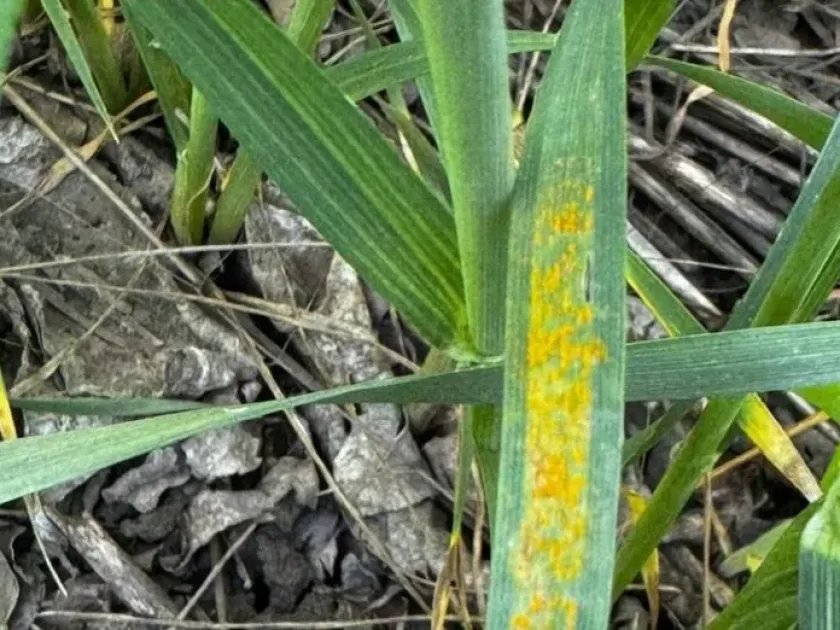
The characteristic symptoms are bright yellow or orange pustules arranged in linear stripes along the leaf veins. This distinct striping pattern helps differentiate it from other rust types, such as stem rust, which produces more irregular, dark red pustules.
- Development of chlorotic stripes on young leaf tissue.
- Formation of bright yellow pustule streaks on foliage.
- Premature leaf senescence and wilting of lower canopy leaves.
- Potential infection of the grain heads, leading to stunted development.
Control measures
Genetic resistance is the most effective and sustainable method for controlling wheat yellow rust. Growers should prioritize planting certified resistant cultivars and keep track of regional rust surveys to ensure that the chosen varieties are resistant to currently prevalent strains.
Cultural management practices involve minimizing the presence of volunteer wheat and weeds that can harbor the fungus between growing seasons. Ensuring optimal plant nutrition and balanced fertilizer application helps maintain plant health, making them less susceptible to initial infection.
Fungicide application is recommended when weather conditions are favorable for disease development and the threshold for infestation is reached. Using systemic fungicides, particularly those containing triazoles or strobilurins, provides curative and preventative protection for the crop canopy.
Discussion
No discussions yet — be the first.