
Wheat yellow rust
Wheat yellow
Description
How to identify
The causative agent of the disease is the fungus Puccinia striiformis f. sp. tritici, which belongs to the kingdom Fungi, phylum Basidiomycota. It is an obligate parasite that requires living plant tissue to complete its life cycle.
Yellow rust, also known as stripe rust, primarily attacks wheat, barley, and rye. It is considered one of the most destructive diseases of cereal crops globally, capable of spreading rapidly over vast areas under favorable conditions.
The fungus survives the winter as mycelium on volunteer wheat plants or autumn-sown winter crops. As temperatures rise in early spring, the fungus begins its asexual reproductive cycle, producing urediniospores.
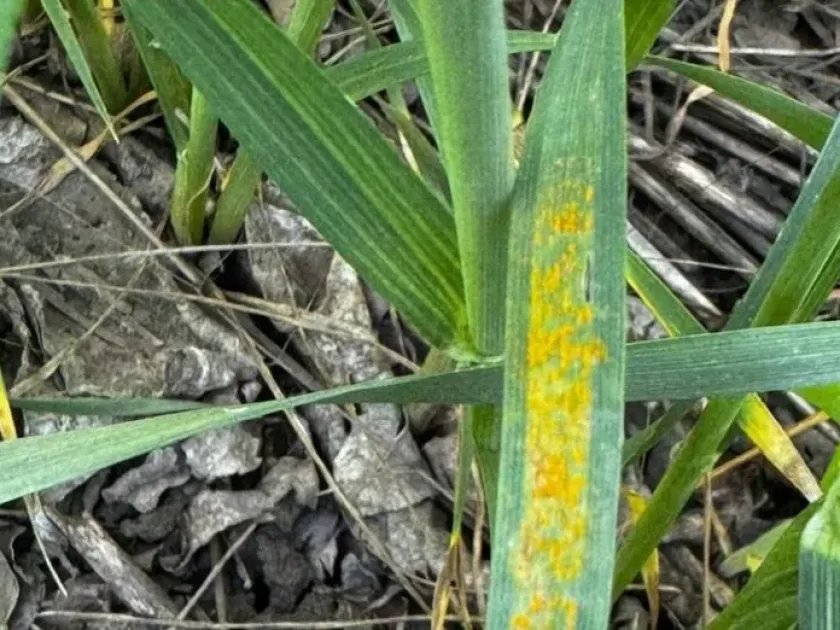
Identification is facilitated by the characteristic arrangement of pustules in long, straight lines or "stripes" that follow the leaf veins. This distinct pattern distinguishes it from leaf rust or stem rust.
The pathogen is highly specialized and relies on its host's physiological state to grow. It thrives in cool and moist environments, making it a significant early-season threat in many temperate wheat-growing regions.
What it damages
The primary damage occurs through the disruption of the photosynthetic process. The fungus destroys chlorophyll-rich tissue, severely limiting the plant's ability to produce energy for grain development.
Severe infections lead to significant yield losses, often exceeding 50% in susceptible cultivars. The grain becomes shriveled, light in weight, and suffers from poor quality, impacting milling and baking properties.
In addition to yield loss, plants weakened by yellow rust become more susceptible to secondary infections and environmental stresses, such as drought or heat, which can exacerbate the decline in grain quality.
When the head (spike) is infected, the developing seeds are directly impacted, resulting in low thousand-kernel weight and poor germination rates for subsequent seed lots.
Economic losses are not limited to grain yield; the necessity for repeated fungicide applications significantly increases production costs for farmers during epidemic years.
When it appears
Yellow rust is a "cool-weather" disease. The optimal temperature range for the development of the fungus is between +5°C and +12°C. Growth slows significantly when temperatures exceed +20°C.
Moisture is a critical factor for successful infection. Free water on leaf surfaces, provided by dew, light rain, or high humidity (above 90%), allows the spores to germinate and penetrate the host tissue.
The disease usually peaks during the tillering and stem elongation stages. If cool and wet conditions persist through these growth stages, the likelihood of a major epidemic increases dramatically.
In regions with mild winters, the fungus can continue its growth throughout the entire winter season, creating a massive reservoir of inoculum ready to spread once spring temperatures arrive.
The latent period, or the time between infection and the appearance of new spores, is very short—typically 7 to 14 days. This allows the disease to spread through several generations within a single growing season.
Signs of infestation
The most visible symptom is the appearance of small, bright yellow to orange pustules arranged in parallel stripes along the leaf surface. These stripes are a clear diagnostic feature.
As the infection progresses, the leaves become chlorotic and eventually necrotic. Under heavy disease pressure, the entire leaf blade may dry out, giving the crop a scorched, sickly appearance.
In addition to the leaves, the infection can spread to the leaf sheaths and even the glumes of the wheat head, causing deformation and stunted development of the spike.
Towards the end of the season, the fungus may produce black teliospores, forming dark, crust-like pustules. This is a sign that the pathogen is preparing to survive the summer or winter period.
- Bright yellow, linear, stripe-like pustules on leaves.
- Chlorosis and premature yellowing of leaf tissue.
- Stunting of plants in severe infection patches.
- Deformed or shriveled grain within the spikes.
Control measures
The most sustainable strategy is the cultivation of resistant or tolerant wheat varieties. Breeders constantly work to introduce new resistance genes to combat the evolving nature of the pathogen.
Cultural practices include the destruction of "green bridges"—volunteer wheat or barley that serve as a source of inoculum during the inter-crop period. Proper crop rotation also helps manage the disease.
Timely application of systemic fungicides is essential when initial symptoms are observed. Modern fungicides, particularly those containing triazoles or strobilurins, offer excellent control and long-lasting protection.
Active field scouting is crucial, starting from the early spring emergence. Early detection of infection hotspots allows for targeted management and helps prevent wider spread across the entire farm.
Nutrient management plays a role in plant health. Avoiding excessive nitrogen fertilization can sometimes reduce the severity of the disease by preventing overly dense canopies that trap moisture.
Discussion
No discussions yet — be the first.