
Wheat yellow rust
Wheat yellow
Description
How to identify
Wheat yellow rust is caused by the fungal pathogen Puccinia striiformis, a member of the Basidiomycota division. It is an obligate biotroph, meaning it relies entirely on living host tissue to complete its life cycle.
This pathogen is globally recognized as one of the most serious threats to wheat production, capable of causing devastating epidemics over large geographical areas due to the wind dispersal of its spores.
The life cycle consists of several stages, with urediniospores serving as the primary source of infection during the growing season. These spores can cycle repeatedly under favorable environmental conditions.
The fungus colonizes the leaf tissue by growing in the intercellular spaces. It draws nutrients directly from the host cells, leading to a significant depletion of plant resources and overall weakness.
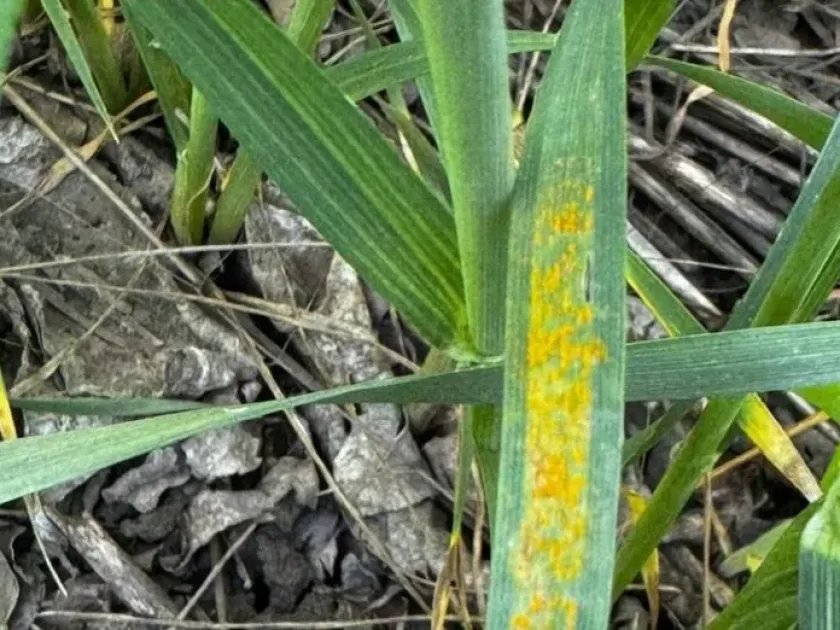
Identification is straightforward due to the distinct visual symptoms. The disease is characterized by the formation of bright yellow to lemon-colored pustules arranged in clear, longitudinal rows or stripes along the leaf veins.
What it damages
The primary host is wheat, but the pathogen also attacks barley, rye, and a wide range of wild grass species. The impact is most severe during the early stages of growth, particularly from tillering to jointing.
The infection destroys the photosynthetic area of the leaves. As the leaves yellow and wither, the plant's ability to produce assimilates is drastically reduced, which directly hinders grain filling.
Severe infestations lead to substantial yield losses, often ranging from 30 to 70 percent in susceptible varieties. The quality of the grain is also compromised, resulting in low weight and reduced protein content.
Plants affected by yellow rust exhibit poor root development and are prone to secondary infections. If the disease reaches the flag leaf, the impact on final yield potential is significantly magnified.
In addition to yield reduction, the economic value of the harvest decreases, as the grain often fails to meet the specifications required by milling and baking industries.
When it appears
Yellow rust thrives in cool and humid conditions. The optimal temperature range for spore germination and infection is between 5°C and 15°C, making it a major concern in early spring.
Infections typically emerge early in the growing season on overwintering leaves. Periods of heavy dew, frequent rain, and cloudy weather facilitate the rapid spread of the disease.
Higher temperatures, typically above 20-25°C, inhibit the growth of Puccinia striiformis. As the summer progresses and heat increases, the disease development usually slows down significantly.
Autumn sowings can become infected if the weather remains cool and damp. The pathogen can survive as mycelium in the infected tissue of volunteer wheat or early-emerged winter crops.
Monitoring is crucial during the active vegetative growth phase. A cool, wet spring serves as a strong indicator that management efforts must be intensified to prevent potential outbreaks.
Signs of infestation
The most iconic sign of yellow rust is the presence of lemon-yellow uredinia (pustules) forming linear stripes along the leaf blades. These stripes are a result of the pathogen's development under the leaf epidermis.
As the plant nears maturity or environmental conditions change, the yellow pustules may transition into dark-brown or black telia. These structures represent the resting stage of the fungus.
Leaves affected by the disease lose their color and eventually turn chlorotic and necrotic, drying out from the bottom of the plant upwards. Extreme infections can spread to leaf sheaths and stems.
If the infection occurs early, the entire crop may appear yellow or chlorotic from a distance. In cases where the head is infected, it may become malformed, and grain development can be entirely prevented.
Microscopic examination of the pustules reveals characteristic globose urediniospores with echinulate (spiny) surfaces, confirming the identity of the rust fungus.
Control measures
The most effective strategy for managing yellow rust is the utilization of genetically resistant wheat cultivars. Breeding programs continuously work to incorporate new resistance genes against emerging pathogen races.
Cultural practices, such as the elimination of volunteer wheat and weeds, are vital for reducing the primary inoculum source. Proper crop rotation also helps in breaking the pathogen's survival cycle.
Fungicide application is necessary when weather conditions are highly conducive to the disease or when early symptoms appear. Systemic fungicides, including triazoles and strobilurins, provide effective control.
Balanced nutrition, particularly avoiding excessive nitrogen applications, helps maintain plant health and reduces the susceptibility of the crop to heavy rust colonization.
- Regular field scouting starting at the beginning of spring.
- Timely application of fungicides before the flag leaf is heavily infected.
- Selection of high-yielding varieties with proven rust resistance ratings.
Causes diseases · 1
Discussion
No discussions yet — be the first.