
Stemonitis
Stemonitis
Description
How to identify
Stemonitis is a genus of slime molds (myxomycetes) belonging to the kingdom Protista. It is crucial to clarify that, from the perspective of agronomy and phytopathology, Stemonitis is not a plant pathogen and does not cause plant diseases.
This organism functions as a saprotroph, meaning it derives nutrients from decaying organic matter. During its vegetative stage, it exists as a plasmodium—a multinucleate, amoeba-like mass capable of movement.
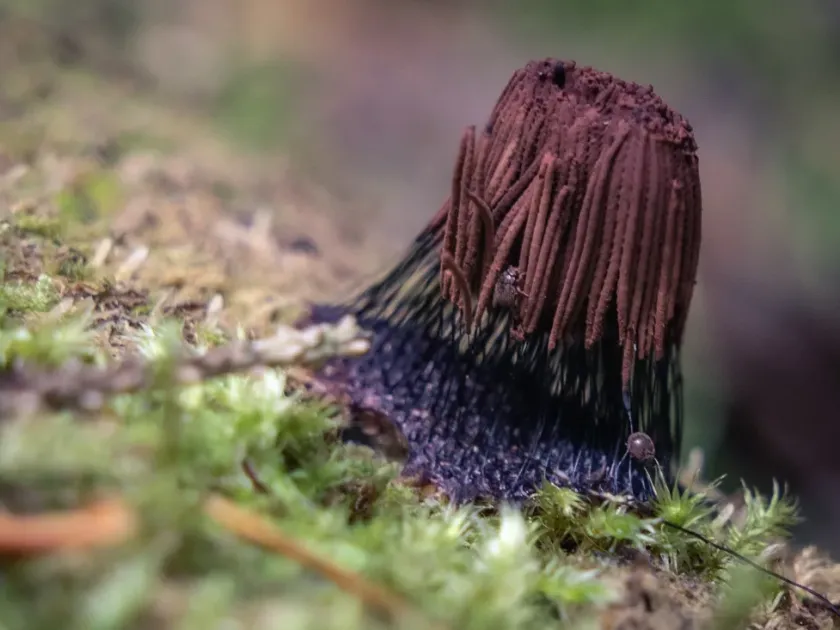
When conditions are right, the plasmodium develops into fruiting bodies called sporangia. These often appear as dark brown, hair-like clusters that can look like tiny feathers.
Under a microscope, Stemonitis is characterized by a well-developed capillitium—a network of filaments within the sporangium that holds the spore mass together. This is a common inhabitant of decaying wood and leaf litter.
In agricultural settings, this organism is only found where there is an accumulation of decaying plant material, and it poses no threat to living plant tissues.
What it damages
Because Stemonitis is purely saprotrophic, it does not damage living crops. It lacks the enzymes required to break down the cell walls of healthy plants, meaning it cannot cause rot, wilt, or necrosis.
Its presence in fields or greenhouses is simply an indicator of high humidity and the presence of rotting organic matter, such as old mulch, straw, or wood debris.
Farmers sometimes mistakenly identify Stemonitis clusters as a fungal infection, but these slime molds do not parasitize crops. They are essentially biological cleaners, breaking down dead material.
While they may cover the surface of wood or soil, they perform no harm to the root system or the foliage of the plants in the vicinity.
In fact, Stemonitis plays a role in the natural humification process, helping to recycle nutrients back into the soil ecosystem.
When it appears
The life cycle of Stemonitis is strictly dependent on moisture levels and the availability of organic substrates. It is most active during or immediately after periods of high humidity and rainfall.
The spores of this organism are dispersed by wind and splashing water. Once they land on a suitable moist surface, they germinate into zoospores that eventually merge to form a plasmodium.
The transition to the reproductive phase, where fruiting bodies appear, typically occurs when environmental conditions shift toward relative dryness, allowing the sporangia to mature.
Development requires solid substrates rich in cellulose or lignin, which is why they are frequently spotted on decaying stumps, hay bales, or wood mulch in damp environments.
Once the sporangia mature, they release their spores into the air, allowing the organism to colonize new areas when moisture levels are once again optimal.
Signs of infestation
The primary sign of Stemonitis is the emergence of dense, dark-brown or black, cylindrical clusters that resemble a small brush or a tuft of hair growing from a decaying surface.
Before the fruiting bodies form, you might notice a translucent or creamy-colored slime mass moving slowly across the surface, which is the active plasmodium feeding stage.
Mature sporangia are extremely fragile. If touched, they release a visible puff of dust-like spores into the air, which is a key diagnostic feature for identification.
Unlike parasitic fungi that invade plant tissues, Stemonitis remains strictly on the surface of the substrate, making it easy to wipe off or remove manually.
These clusters are usually grouped tightly together, and their color can range from light beige in early stages to dark brown or charcoal upon reaching maturity.
Control measures
Since Stemonitis is not a plant disease, no specific chemical control or fungicide application is necessary or recommended.
- Improve drainage in areas with standing water or excessive moisture.
- Remove excess decaying plant debris or wood waste from the field.
- Ensure adequate ventilation in greenhouses to lower ambient humidity levels.
- Avoid over-mulching or storing organic waste in damp, non-ventilated areas.
If the appearance of these slime molds is aesthetically undesirable, simply removing the colonized substrate or allowing the area to dry out will cause the organism to disappear.
The use of pesticides or fungicides is a waste of resources and can potentially harm beneficial soil microorganisms that contribute to overall soil health.
Causes diseases · 1
Discussion
No discussions yet — be the first.