
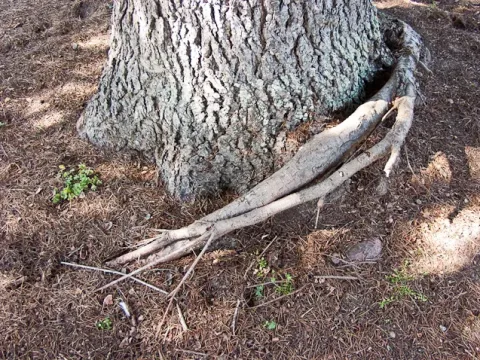
Stem girdling
Girdling of
Stem girdling is a physical or physiological disruption of the tree's outer vascular system, specifically the phloem, which occurs in a continuous circle around the trunk or branches. While not a pathogen-caused disease, it mimics the symptoms of fatal plant illnesses by stopping the transport of sugars and nutrients.
What the section contains
Stem girdling
The biological impact is severe because the tree is deprived of the ability to move photosynthetic products from the leaves to the roots. This disruption leads to starvation of the root system and, eventually, the death of the entire tree if the girdling is complete.
In agronomy, this is often the result of external factors such as animal gnawing (rodents), improper staking, wire wrapping, or accidental mechanical damage from machinery. It is categorized as a major stressor that makes trees susceptible to secondary pathogens.
There is no specific pathogen name, but the condition creates a portal for opportunistic fungi, bacteria, and wood-boring insects. These organisms exploit the dying tissue, often masking the original cause of death with symptoms of rot or fungal infection.
Identification is based on visual inspection: a distinct gap or ring around the trunk where bark and cambium are missing or severely damaged. The inability of the tree to form healthy callus tissue in this area confirms the severity of the problem.
Fruit trees and ornamental woody species are the most common victims. Girdling interrupts the metabolic cycle, causing the tree to lose its capacity to sustain growth, flower development, and fruit production.
Above the girdled area, there is typically a noticeable swelling or bulge in the trunk. This is caused by the accumulation of carbohydrates that cannot pass down to the roots, stimulating excessive cell division in the cambium just above the obstruction.
Young trees are especially vulnerable and may die within a single growing season. Older, established trees may survive for several years, gradually declining as their root systems slowly atrophy and lose their nutrient storage capacity.
The compromised tree becomes structurally unstable. The swelling and the lack of proper sap flow weaken the wood's density, significantly increasing the risk of breakage during storms or heavy wind conditions.
Secondary damage is extensive. The stressed tree produces chemical signals that attract bark beetles and other pests, which can accelerate the death of the tree far faster than the girdling itself would.
Leaf yellowing (chlorosis) and early leaf drop are often the first signs of trouble. These symptoms occur because the roots are no longer receiving energy to absorb water and minerals, mimicking the symptoms of drought stress.
A visible ring or band around the trunk, often accompanied by exposed xylem (wood), is the diagnostic sign. If caused by animals, clear tooth marks will be evident within the damaged area, often extending beneath the surface of the bark.
Lack of new shoot growth is a critical sign in spring. The tree may attempt to bloom, but the flowers will likely drop, and the canopy will appear thin and sparse, indicating the tree is in a critical energy-saving mode.
In the fall, affected trees typically change leaf color and drop their foliage earlier than healthy specimens of the same species. This premature senescence is a clear indication that the tree's metabolic processes are failing.
The appearance of deep vertical cracks or fungal fruiting bodies around the girdle site indicates that the tissue is already dead and that decay organisms are colonizing the damaged trunk section.
Prevention is the primary method of control. This includes installing wire mesh guards around the base of trees to prevent rodent damage and ensuring that any tree ties or tags are loose enough to prevent constriction as the trunk grows.
If partial girdling occurs, the wound should be cleaned of dead tissue and protected with a fungicide or wound dressing. Keeping the area clean helps the tree's natural defense system to compartmentalize the injury.
For complete girdling, "bridge grafting" may be performed to restore the connection between the upper and lower bark. By grafting multiple shoots across the girdled area, the flow of nutrients to the roots can be physically restored.
Consistent monitoring and timely maintenance are essential. Regularly checking tree health after storms and ensuring that no foreign objects are constricting the bark will prevent this fatal physical injury.
- Installation of rodent guards.
- Regular inspection for constrictions.
- Bridge grafting for salvage.
- Sanitizing wounds to prevent decay.