
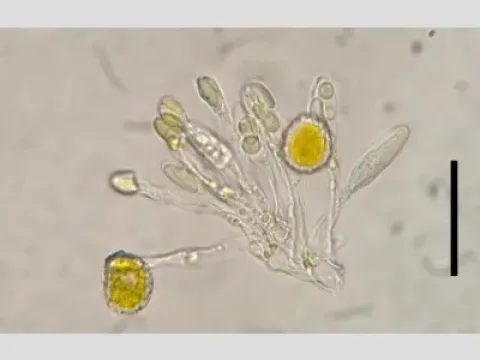
Sphenospora kevorkianii
Sphenospora kevorkianii
Sphenospora kevorkianii is a specialized species of rust fungus belonging to the phylum Basidiomycota. As an obligate biotroph, this pathogen relies entirely on its host, specifically plants within the Orchidaceae family, to complete its complex biological life cycle.
What the section contains
Sphenospora kevorkianii
This fungus is recognized as the causal agent of rust disease in orchids. It is characterized by its distinct spore morphology and its preference for the high-humidity environments where various orchid species typically thrive, both in their natural habitats and in greenhouse cultivation.
The primary hosts of this pathogen are various orchid species. The fungus specifically attacks the foliage, leading to physiological disruption of the plant. By diverting essential nutrients from the host cells to support its own growth, the fungus significantly impairs the plant's health.
The damage caused by this pathogen is not only aesthetic but also severely debilitating. Infected orchids often exhibit stunted growth, reduced flowering potential, and a weakened immune system, making them more susceptible to other opportunistic diseases or environmental stresses.
Symptoms of the infection typically appear on the abaxial side of the orchid leaves as small, dusty, rust-colored pustules. These pustules represent the fruiting bodies where the fungus produces spores for further dispersal across the orchid population.
As the infection advances, chlorotic spots may develop on the adaxial side of the leaves, directly corresponding to the site of infection. Eventually, the infected tissue may undergo necrosis, leading to yellowing, leaf shriveling, and premature senescence of the affected foliage.
Effective management of Sphenospora kevorkianii relies on strict sanitary practices. Growers should prioritize the inspection of new plants before introducing them into existing collections, as early detection is the most effective way to prevent widespread contamination in a greenhouse.
- Maintain low relative humidity during susceptible periods.
- Ensure adequate air circulation to prevent spore settlement.
- Promptly remove and destroy all infected plant material.
- Use systemic fungicides labeled for rust control if infection persists.
Regular monitoring of the lower leaf surfaces is crucial for early intervention. If chemical treatment is necessary, it is vital to rotate different fungicide classes to prevent the development of resistance in the fungal population, ensuring long-term plant health.