
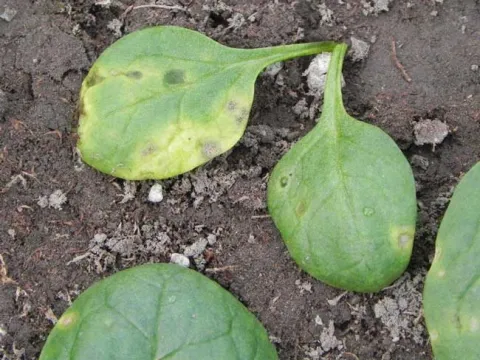
Spinach anthracnose
Colletotrichum spinaciae
Spinach anthracnose is a fungal disease caused by the pathogen Colletotrichum spinaciae. This fungus belongs to the genus Colletotrichum and is a significant threat to leafy green vegetables.
What the section contains
Spinach anthracnose
The pathogen completes its life cycle by producing conidia within specialized fruiting structures known as acervuli. These structures break through the plant surface, releasing spores into the environment.
This fungus is highly persistent and can survive as mycelium or sclerotia in soil and on infested plant debris, serving as the primary inoculum for future growing seasons.
In a laboratory setting, the pathogen is identified by cultivating it on agar media, where it produces characteristic dense colonies with abundant conidia formation.
Colletotrichum spinaciae is highly adapted to humid environments, making it particularly aggressive during prolonged periods of rain or excessive overhead irrigation.
The disease primarily attacks spinach (Spinacia oleracea), causing significant damage to the leaf tissue, which is the edible and marketable part of the crop.
Infection results in necrotic spotting, which ruins the aesthetic quality of the leaves, making them unmarketable and unsuitable for consumer use.
In severe cases, the necrosis can spread rapidly, leading to the collapse and death of entire plants, resulting in substantial yield losses during the harvest period.
The reduction in healthy leaf surface area interferes with the plant's photosynthetic capacity, leading to stunted growth and lower nutrient content in the leaves.
The spread of the fungus can be rapid across a field, especially if environmental conditions favor the dissemination of spores from the primary infection sites to healthy foliage.
Symptoms typically appear during the mid-to-late growth stages of the spinach crop when humidity levels are consistently elevated, facilitating fungal development.
Periods of heavy rainfall followed by mild temperatures provide the perfect conditions for the massive dispersal of conidia and successful host colonization.
Under greenhouse conditions, if ventilation is poor, the disease can manifest at any point during the growth cycle due to constant moisture on the leaf surfaces.
As the season progresses, if plant debris is not managed, the concentration of the inoculum increases, significantly raising the risk of widespread infection.
Early-season outbreaks are often linked to contaminated seeds or soil pathogens that survive from previous plantings, manifesting as soon as the seedlings emerge.
The initial signs of infection include small, circular or irregular water-soaked spots on the leaves, which gradually darken to brown or grey as the tissue dies.
A distinct feature of anthracnose is the development of dark margins around the necrotic spots, often with the centers appearing lighter or slightly depressed.
In humid conditions, small black pimple-like structures, the acervuli, appear in the center of the spots, often exuding a mass of pinkish or greyish spores.
As the disease advances, leaves may turn yellow, wither, and become brittle, making them look burnt or decayed, rendering them unusable for fresh consumption.
Lesions can also appear on the leaf petioles, causing the plant to droop and lose its structural integrity, a symptom often mistaken for root-related issues.
Preventative management, such as crop rotation, is essential. Avoiding spinach planting in the same area for at least three years helps break the fungal life cycle.
- Use certified disease-free seeds and treat them before sowing.
- Remove and destroy all infected plant material immediately after harvesting to prevent inoculum buildup.
- Maintain proper plant spacing to allow for adequate air circulation and faster drying of leaves.
- Switch to drip irrigation to keep the foliage dry, as moisture is the key trigger for spore germination.
Biological control agents, such as certain strains of Bacillus subtilis, can be applied to suppress the pathogen's growth during the early stages of infection.
Chemical control should be used with extreme caution due to the short growth cycle of spinach and strict regulations regarding pesticide residues on leafy crops.