
Spinach severe curly leaf virus
Spinach severe
Spinach severe curly leaf virus (SpSCLV) is a destructive plant pathogen belonging to the Begomovirus genus within the Geminiviridae family. Its genome consists of a single-stranded circular DNA molecule.
What the section contains
Spinach severe curly leaf virus
The primary vector for the transmission of this virus is the tobacco whitefly (Bemisia tabaci). The insect acquires the virus while feeding on infected plant sap and remains a carrier for its entire life cycle, facilitating rapid spread.
The virus exhibits a high degree of host specificity, primarily targeting plants within the Amaranthaceae family. Once inside the host cells, it disrupts normal growth processes, leading to the characteristic symptoms of the disease.
Field identification can be challenging due to the overlap of symptoms with other viral pathogens. Agronomists typically rely on laboratory diagnostic techniques like PCR (polymerase chain reaction) to confirm the presence of the virus.
The distribution of this pathogen is closely linked to the environmental factors that favor whitefly population growth. Warm, arid climates with high insect activity pose the highest risk for large-scale outbreaks.
The primary crop affected by this virus is cultivated spinach (Spinacia oleracea). Infection can lead to complete crop failure, especially if the infestation occurs at the early stages of plant development.
Weed species can act as reservoirs for the virus during the off-season. Maintaining weed-free fields and buffer zones is critical to preventing the introduction of the virus into commercial production sites.
Infection causes severe damage to the plant's overall physiology, hindering nutrient transport and metabolic processes. As a result, the plant stops growing and loses its commercial quality.
The economic impact is significant, as the resulting leaf deformation and chlorosis render the produce unmarketable. Even mild infections can lower the quality of the spinach to a degree that makes harvesting unprofitable.
Due to the efficiency of the whitefly as a vector, the virus can spread throughout an entire field in a very short period, causing massive economic losses for spinach producers worldwide.
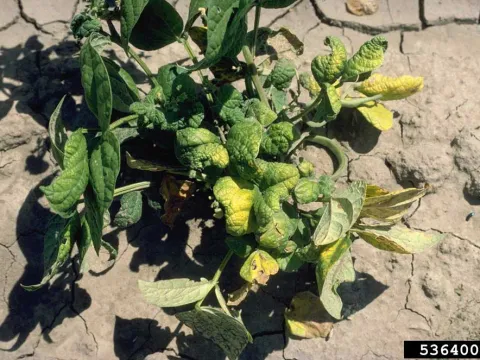
The hallmark symptom of this disease is severe curling and distortion of the leaves. The leaf margins often fold inwards, giving the plant a ruffled, stunted appearance that is easily recognizable.
The plants exhibit significant stunting and shortened internodes. The overall biomass accumulation is heavily reduced, and the spinach fails to develop the rosette structure necessary for high-quality production.
Leaf color changes are common, ranging from deep green to severe chlorosis. Mosaic patterns often emerge, which are indicative of the systemic disruption of the plant's photosynthetic capabilities.
Vein clearing is another common sign, where the tissues surrounding the leaf veins lose their color, turning light yellow or white, marking the progression of the viral infection.
- Severe leaf curling and crinkling.
- Stunted plant height and reduced biomass.
- Chlorosis and development of mosaic patterns.
- Distorted and thickened leaf texture.
The core strategy for managing SpSCLV is the strict control of the whitefly population. Applying systemic insecticides is essential to reduce the insect vector's pressure on young spinach crops.
Rigorous weed management in and around production fields is vital, as wild Amaranthaceae species often harbor the virus and serve as a source for primary whitefly infection.
Spatial isolation of spinach crops from high-risk hosts of the whitefly, such as tomatoes or peppers, can significantly lower the probability of viral transmission to the spinach field.
In protected cultivation (greenhouses), the use of insect-proof screening is highly recommended to provide a physical barrier against whitefly entry, effectively protecting the young seedlings.
While resistant varieties represent the most sustainable long-term solution, currently, an integrated pest management approach combining vector control, sanitation, and physical barriers is the best practice for farmers.