
Sphaerulina rehmiana
Sphaerulina rehmiana
Sphaerulina rehmiana is a fungal pathogen classified within the Dothideomycetes class. It functions as an obligate parasite, primarily attacking various ornamental and perennial plant species, most notably members of the Iridaceae family.
What the section contains
Sphaerulina rehmiana
The fungus reproduces via ascospores formed within small, submerged fruiting bodies known as pseudothecia. These structures are microscopic and are essential for the biological identification and taxonomic classification of the species.
The primary impact of S. rehmiana involves the degradation of leaf tissue, which drastically reduces the photosynthetic surface area of the host plant. This damage leads to weakened plant vigor and stunted development.
In cases of severe infestation, the pathogen causes premature defoliation, which prevents the plant from storing sufficient carbohydrates for the dormant season. This significantly increases the risk of plant mortality during winter months.
The development cycle of the fungus is strictly dependent on moisture levels. Spore germination and subsequent infection peaks during periods of high humidity, frequent rainfall, and moderate temperatures typical of late spring and early summer.
After the initial infection, the fungus produces secondary inoculum that facilitates rapid spread across the field or garden. Dissemination occurs primarily through splashing water, rain droplets, and occasionally strong wind currents.
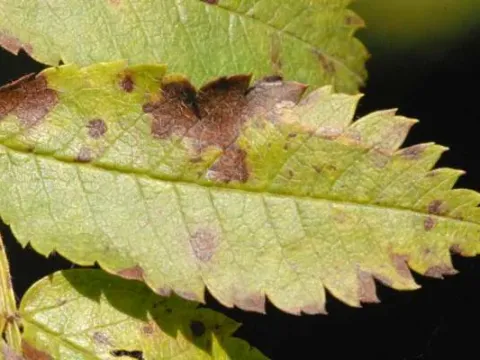
Symptoms initially manifest as small, chlorotic or light-colored spots on the leaves. As the infection progresses, these spots expand, often developing a distinct reddish-brown or dark border, which is a classic diagnostic feature.
As the tissue dies and becomes necrotic, it turns gray or tan. Under close inspection, the presence of dark, pinhead-sized reproductive structures (pycnidia or pseudothecia) can be observed within the necrotic leaf areas.
Effective management begins with strict sanitation practices. Removing and destroying all infected plant debris at the end of the growing season is crucial, as this material serves as the primary reservoir for the pathogen to overwinter.
Chemical control involving systemic fungicides is recommended during the early stages of vegetation to prevent the establishment of the disease. Rotating active ingredients in fungicides is advised to prevent the development of resistant strains within the pathogen population.