
Spinach curly top virus
Spinach curly
Description
How to identify
The causative agent of this disease is the Beet curly top virus (BCTV), which belongs to the Geminiviridae family, genus Curtovirus. It is a severe pathogen affecting a wide range of vegetable crops.
The virus is not transmitted through seeds or through mechanical contact. The primary vector is the beet leafhopper Circulifer tenellus, which transmits the virus while feeding on the plant phloem.
Once a leafhopper acquires the virus, it remains infectious for its entire life cycle. The transmission process is persistent, making even low populations of insects dangerous for commercial spinach.
The virus particles have a unique twinned icosahedral structure typical for geminiviruses, providing stability in the insect vector and the plant's vascular system.
Environmental factors, particularly hot and arid weather, significantly accelerate the movement and reproduction of leafhopper populations, increasing the disease prevalence.
What it damages
Spinach is a highly susceptible host. The virus infects many other crops like sugar beets and tomatoes, which often serve as major reservoirs for the pathogen near spinach fields.
Economic damage is severe because the disease ruins the marketability of the product. The deformation of the leaves makes them impossible to sell as fresh produce.
Early infections often lead to total crop failure. Plants infected at the seedling stage show minimal growth and usually remain as stunted, inedible rosettes.
The virus disrupts the plant's metabolism by clogging phloem tissues, which inhibits nutrient transport. This leads to poor accumulation of vitamins and minerals, reducing the nutritional value of the harvest.
Contaminated fields pose a high risk of spreading the virus to neighboring areas through the flight of insect vectors, necessitating strict quarantine and sanitation measures.
Signs of infestation
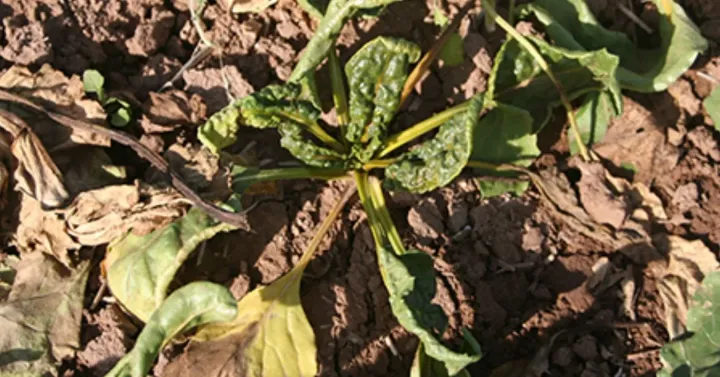
The first signs include downward curling of leaves and a distinct puckered or crinkled texture. The leaves become thick, stiff, and brittle compared to healthy foliage.
Stunting is the most prominent symptom. Plants fail to reach their potential size, and the intermodal space is reduced, resulting in a compressed, rosette-like appearance.
Leaves often exhibit chlorosis or a yellowish tint. In advanced cases, the veins on the underside of the leaves become raised and may turn purple or brown due to necrotic tissue development.
The root system of infected plants is poorly developed, which makes the plant more susceptible to environmental stress and secondary root rot infections.
- Downward curling and crinkling of leaves
- Severe stunting and reduced size
- Chlorosis and yellowish leaf discoloration
- Brittle and thickened leaf texture
- Swollen and discolored leaf veins
Control measures
Management focuses primarily on controlling the leafhopper vector. Using systemic insecticides is essential to keep insect populations below the threshold that causes significant viral spread.
Weed management is a crucial preventive measure. Removing host weeds around the field eliminates the reservoirs where the virus and the leafhoppers overwinter.
Using floating row covers in the early growth stages of spinach provides an effective physical barrier against leafhoppers, significantly reducing the initial infection risk.
Implementing proper crop rotation and spatial isolation from other susceptible crops like beets can help mitigate the risk of virus introduction into the field.
Regular field scouting using yellow sticky cards allows for the early detection of leafhoppers, enabling timely intervention before the virus becomes widespread.
Causes diseases · 1
Discussion
No discussions yet — be the first.