
Sphaerotheca humuli
Sphaerotheca humuli
Sphaerotheca humuli is an obligate parasitic fungus belonging to the Ascomycota phylum. It primarily infects hop plants and various members of the Rosaceae family, causing the disease commonly known as powdery mildew.
What the section contains
Sphaerotheca humuli
The fungus develops superficially on the host plant's surface, using haustoria to penetrate epidermal cells and extract nutrients. This localized feeding strategy allows the fungus to thrive while keeping the host plant alive for as long as possible.
Reproduction occurs through two main phases: the asexual phase, characterized by the production of abundant white conidia, and the sexual phase, which results in the formation of dark cleistothecia that serve as overwintering structures.
The fungus is highly specialized, and in many taxonomic studies, it is closely linked or synonymous with Podosphaera macularis, which is the currently accepted name for the powdery mildew pathogen affecting hops in most regions.
Genetic plasticity is a hallmark of this pathogen, allowing it to adapt to different environmental conditions and develop resistance to various fungicides used in industrial agriculture.
The economic impact of this pathogen is severe, particularly in hop cultivation. Infection leads to a significant decrease in both yield quantity and quality, directly affecting the alpha-acid content essential for brewing.
Infected cones become distorted and discolored, often drying prematurely. This makes the product commercially worthless, as the chemical profile and physical appearance of the cones are critically altered.
Severe infestations cause massive leaf loss and overall plant decline. Since hops are perennial, the weakening of the root system due to impaired photosynthesis can lead to reduced plant vigor in subsequent growing seasons.
In berry crops like strawberries, the fungus coats the fruit with a white powdery layer, making it unmarketable and susceptible to further rot caused by secondary saprophytic microorganisms.
The cost of managing this disease involves repeated chemical applications throughout the season, which significantly increases the production costs for hop growers globally.
The disease cycle begins in the spring when overwintered cleistothecia release ascospores. These spores are wind-borne and land on young, susceptible hop shoots, initiating primary infections.
During the growing season, if temperatures remain between 18°C and 25°C, conidial production is prolific. The disease can spread rapidly throughout a field under conditions of high humidity and adequate temperature.
Moderate to high relative humidity (above 70%) is optimal for spore germination and colony expansion. However, the fungus can tolerate short periods of drier weather by surviving within the plant tissues.
As the season progresses toward autumn, the reduction in daylight and temperature triggers the fungus to enter its sexual cycle. The formation of black, pinhead-sized cleistothecia on the surface of the white mycelium marks the transition to the dormant phase.
In greenhouses or controlled environments, the absence of a distinct winter period can allow the fungus to remain in the conidial stage year-round, posing a continuous threat to the crop.
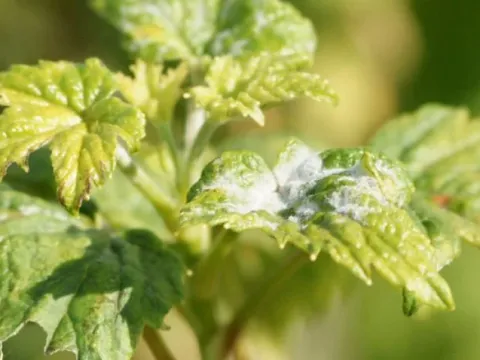
The initial signs are small, circular white spots that appear on the leaves. These spots consist of mycelium and conidiophores and eventually coalesce to cover the entire leaf surface.
As the infection progresses, affected leaves may turn yellow, curl, and eventually become necrotic. The stunted growth of shoots and deformed internodes are also common indicators of a heavy infestation.
The white powdery growth is highly visible on the surface of hop cones. This layer often gives the plant parts an appearance of being dusted with flour, which is the diagnostic symptom of powdery mildew.
- Presence of white, flour-like fungal growth on foliage and cones.
- Chlorosis and premature senescence of the leaves.
- Stunted shoot development and distorted plant growth.
- Appearance of tiny black dots (cleistothecia) late in the season.
- Musty odor associated with heavily infected plant tissues.
Early diagnosis is vital; if detected at the first sign, containment is much more effective than trying to manage an established, field-wide epidemic.
Effective management starts with strict sanitation. Removing and destroying crop debris after harvest is essential to reduce the number of overwintering cleistothecia in the soil.
Agrotechnical practices such as proper plant spacing and thinning help improve airflow within the canopy. By reducing the humidity at the leaf level, the conditions become less favorable for spore germination.
Chemical control often involves systemic fungicides, particularly triazoles, and contact fungicides like sulfur-based products. These should be applied preventively or at the very first indication of disease.
Adhering to a robust resistance management program by rotating fungicides with different modes of action is crucial to prevent the fungus from developing insensitivity to treatments.
Integrating resistant cultivars into the production cycle is the most sustainable approach, providing a foundation for disease control that minimizes the need for frequent chemical intervention.