
Sphaerulina rubi
Sphaerulina rubi
Sphaerulina rubi is an ascomycete fungus within the Mycosphaerellaceae family. It is a specialized plant pathogen that primarily infects members of the Rubus genus, including raspberries and blackberries.
What the section contains
Sphaerulina rubi
In agronomy, the pathogen is frequently identified by its asexual stage, Septoria rubi. This stage is responsible for the disease commonly known as Septoria leaf spot or white leaf spot of berries.
The fungus produces mycelium that colonizes the plant tissues, eventually leading to the formation of pycnidia. These are small, black, fruiting bodies visible to the naked eye on the surface of infected lesions.
The fungus overwinters in plant debris, fallen leaves, and on the canes of infected plants. As spring approaches with warmer temperatures and moisture, it releases spores that trigger new infections on emerging foliage.
High humidity and consistent rainfall are the primary drivers for disease outbreaks. Poor air circulation in densely planted fields provides the perfect environment for the pathogen to spread rapidly across the crop.
The primary hosts affected by this pathogen are raspberries and blackberries. The fungus attacks all aerial parts of the host, including leaves, petioles, fruit pedicels, and the canes themselves.
Significant damage occurs when the foliage drops prematurely, which cripples the plant's photosynthetic capacity. This leads to weakened plants that have poor winter hardiness and reduced vigor in the following season.
Infection on the canes often causes the bark to crack or split. These lesions serve as entry points for secondary infections and make the plant highly susceptible to cold injury and frost damage during winter months.
Overall yield is severely impacted by Sphaerulina rubi. Berries on infested bushes often fail to reach full maturity, resulting in smaller, underdeveloped, or deformed fruits that lack commercial value.
If left unmanaged, the pathogen builds up in the soil and plant residue, creating a persistent infection cycle that eventually renders the plantation unproductive and unprofitable.
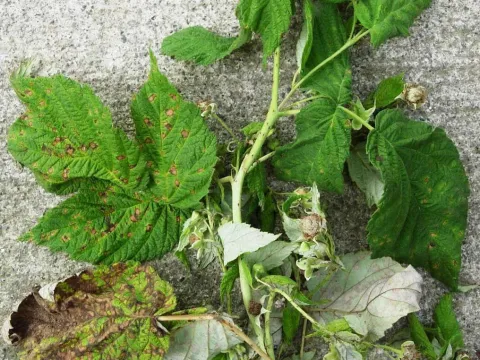
Symptoms typically begin appearing in late spring. The earliest signs are small, reddish-brown spots scattered across the leaves, which eventually turn pale or white in the center as the infection progresses.
A distinctive feature of these spots is a dark brown or purple border surrounding the pale center. Within these spots, tiny black pycnidia develop, which are clear indicators of the fungus's presence.
Canes affected by the pathogen show dark, blotchy lesions that can merge into larger areas of necrosis. Over time, the bark in these areas may split, compromising the structural integrity of the cane.
Severely infected petioles may twist or wither, causing the leaves to turn yellow and abscise prematurely. In heavy infestations, plants may lose a significant portion of their foliage long before autumn.
Early identification is crucial for managing the disease. Farmers should monitor for white spots with black dots to differentiate this fungal issue from other types of leaf blemishes.
Integrated pest management strategies are essential for controlling the spread of Sphaerulina rubi. Cultural practices form the first line of defense to reduce the initial inoculum load in the field.
Sanitation is critical; all fallen leaves and diseased canes must be collected and removed from the site. Burning this material is the most effective way to eliminate the fungus's overwintering sites.
Proper pruning and thinning of the plants ensure better airflow, which decreases the humidity within the plant canopy. Managing weeds around the base of the bushes also helps in reducing ambient moisture.
Chemical control involving copper-based fungicides during the early spring is a standard practice for managing the disease. Systemic fungicides may be applied during the growing season if symptoms persist.
- Removal and destruction of infected debris.
- Pruning for better air movement.
- Use of disease-resistant raspberry varieties.
- Preventive fungicide applications during the season.