
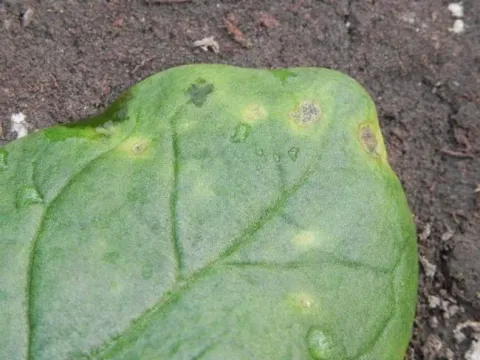
Spinach Cladosporium leaf spot
Cladosporium variabile
Spinach leaf spot is a fungal disease caused by the pathogen Cladosporium variabile. As a member of the Cladosporiaceae family, this fungus is specifically adapted to parasitize Spinacia oleracea, often becoming a significant problem in humid growing regions.
What the section contains
Spinach Cladosporium leaf spot
The pathogen reproduces via conidia, which are small, airborne spores that allow the fungus to spread rapidly across a field. These spores are highly resilient and can survive in the soil or on infected plant debris from previous seasons.
Systemically, Cladosporium variabile is classified as an anamorphic fungus. It thrives under specific environmental conditions, and its life cycle is heavily dependent on moisture availability and moderate temperatures to trigger spore germination and mycelial growth.
Laboratory identification typically involves observing the conidial morphology under a microscope. Field diagnosis relies on the distinct, dark, velvet-like fungal mats that form on the leaves, which are characteristic of this specific Cladosporium species.
The persistence of the fungus in soil and seeds makes it a challenging pathogen to eradicate once it establishes itself in a farming system, necessitating rigorous sanitation and preventative management strategies.
The primary host for Cladosporium variabile is spinach. The fungus attacks the leaves, which are the most valuable part of the plant, leading to significant economic losses for growers who supply fresh-market produce.
Infected leaves develop unsightly spots and necrotic tissues, rendering them unsuitable for human consumption. This reduces the quality of the harvested crop and often results in total yield rejection if infection levels are high.
In greenhouse settings, the damage is particularly severe. The stable, humid environment facilitates rapid disease progression, often resulting in widespread outbreaks that can ruin an entire production cycle if left unmanaged.
Secondary damage occurs as the infected tissue dies, making the plant susceptible to opportunistic bacterial decay. This further degrades the harvested product and shortens the shelf life of the spinach significantly.
Overall, the damage caused by Cladosporium variabile includes direct crop loss, increased labor costs for sorting and discarding affected leaves, and potential long-term contamination of the soil in the growing area.
The disease is most prevalent during periods of high humidity and moderate temperatures, typically between 15°C and 22°C. These conditions are common during the spring and fall growing seasons when spinach is most actively cultivated.
In indoor production environments, the disease can occur throughout the year if ventilation is inadequate. Condensation on leaves is a critical factor, as even a small amount of surface moisture allows the fungal spores to germinate and infect the plant.
The primary inoculum usually comes from contaminated seeds or soil-borne spores. As temperatures rise to the optimal range, the disease moves from initial localized infections to wider distribution across the crop.
Scouting is vital during the early leaf development stages, specifically when plants reach the 3 to 5 leaf stage. Regular inspections can help identify the first symptoms before the infection becomes a uncontrollable epidemic.
Extended wet weather, such as periods of rain or heavy morning fog, is a major risk factor. During these times, the pathogen spreads faster, and the moisture level on the leaf surface remains high enough to sustain fungal growth.
Initial signs of infection appear as small, pale yellow or gray spots on the leaf surface. As the disease develops, these spots expand, turn brown, and may develop a necrotic center as the leaf tissue dies.
A distinctive feature of this infection is the olive-green to gray velvet-like fungal growth that develops on the underside of the leaves directly beneath the spots. This is the pathogen's sporulation, which confirms the diagnosis of Cladosporium leaf spot.
In severe cases, the spots coalesce, covering large portions of the leaf. The affected areas eventually dry out, become brittle, and may fall out, creating a shot-hole appearance that significantly damages the marketability of the product.
Key symptoms include:
- Chlorotic yellow spots on the leaf blades.
- Olive-green velvety mold on the undersides of leaves.
- Progressive necrosis and browning of leaf tissue.
- Stunted growth and reduced turgidity of the plant.
- Deformed, unmarketable leaf rosettes in severe infections.
If the infection reaches the petioles and stems, the entire leaf may wilt and die prematurely. This rapid progression often leads to mass spore release, further contaminating the remaining healthy plants in the field.
Effective control starts with the use of certified, disease-free seeds. Crop rotation is also essential, with a minimum 3-year interval between spinach crops to prevent the accumulation of soil-borne inoculum.
Agronomic practices should focus on reducing humidity and leaf wetness. Proper plant spacing to encourage airflow, the use of sub-surface irrigation, and diligent greenhouse ventilation are key strategies to minimize infection risk.
Sanitation is critical; all infected plant debris must be removed and destroyed immediately after harvest. Deep plowing of the fields helps bury spores, reducing the likelihood of infection in the following season.
Fungicides can be used as a last resort in severe outbreaks. Growers must choose products specifically labeled for spinach and strictly follow pre-harvest intervals, given the short maturation period of the crop.
Breeding and planting resistant cultivars is the most sustainable approach to controlling Cladosporium leaf spot. Selecting varieties with natural genetic resistance significantly lowers the reliance on chemical inputs and ensures higher yield consistency.