
Sphaerotheca fusca
Sphaerotheca fusca
Sphaerotheca fusca is a pathogenic fungus belonging to the order Erysiphales. It is recognized as a primary causal agent of powdery mildew disease in various agricultural and horticultural crops worldwide.
What the section contains
Sphaerotheca fusca
This fungus is an obligate parasite, meaning it requires living host tissue to survive and reproduce. It obtains nutrients through specialized structures called haustoria, which penetrate the host's epidermal cells.
The lifecycle involves asexual reproduction via conidia, which facilitate rapid spread during the growing season, and sexual reproduction producing cleistothecia. These structures serve as overwintering forms that survive in plant debris.
The fungus thrives in environmental conditions characterized by moderate temperatures ranging from 18 °C to 25 °C. High humidity levels favor its growth, though it does not strictly require surface water to initiate germination.
Airborne conidia are the primary means of transmission. They can be carried by wind over long distances, allowing the pathogen to colonize new fields rapidly once environmental conditions become favorable.
The primary hosts for Sphaerotheca fusca are members of the Cucurbitaceae family, including cucumbers, zucchini, squash, melons, and watermelons. It also infects several weed species within this family.
The damage caused by the fungus is significant as it reduces the photosynthetic capacity of the plants. By covering the leaf surface, the white mycelium prevents effective light absorption and gas exchange.
Severe infections lead to chlorosis, premature leaf senescence, and tissue necrosis. This physiological stress drastically affects fruit development, leading to stunted growth and reduced yields.
In addition to yield loss, the quality of the harvested produce is negatively impacted. Melons and watermelons, in particular, may exhibit lower sugar content and poor marketability due to the infection.
If left unmanaged, the disease can spread throughout an entire field, resulting in substantial economic losses and requiring extensive efforts to regain plant health during subsequent growth stages.
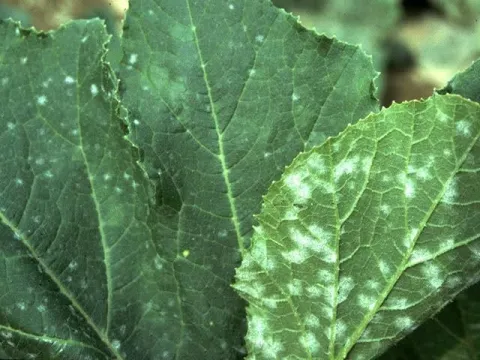
Early symptoms appear as small, scattered white powdery spots on the upper leaf surfaces. These spots gradually expand and coalesce, eventually covering the entire leaf lamina, petioles, and even stems.
The fungal growth, initially powdery and white, may become dense and greyish-brown as it matures. The infected leaf tissues become brittle, eventually turning yellow and dying off.
Deformation of plant tissues is common, including curling and wilting of the leaves. Infected stems show reduced vigor, leading to overall stunting of the plant's development and premature cessation of flowering.
As the infection cycle nears its end, tiny black dots become visible on the mycelium. These are the cleistothecia, the sexual fruiting bodies of the fungus, which are critical for disease survival during dormant periods.
Under heavy infection levels, the powdery growth may also manifest on the fruits, creating unsightly blemishes that render the produce unacceptable for sale, despite the flesh remaining edible.
Integrated pest management (IPM) for this pathogen starts with sanitation. Thoroughly removing and burning or deep-burying all crop residues after the harvest is essential to reduce the primary inoculum load.
Maintaining proper crop rotation and ensuring spatial separation between new cucurbit plantings and areas where the disease was previously observed can help delay the onset of infection.
Chemical control involving systemic fungicides is highly effective when applied at the onset of symptoms. Rotating different classes of chemical compounds is necessary to prevent the development of fungicide resistance.
In greenhouse settings, climate control is vital. Proper ventilation, maintaining lower humidity levels, and ensuring adequate light exposure help create conditions that are highly unfavorable for fungal proliferation.
Selecting disease-resistant or tolerant cultivars is the most sustainable approach to long-term disease management, effectively minimizing the impact of Sphaerotheca fusca on agricultural production.