
Sphaerulina oryzina
Sphaerulina oryzina
Sphaerulina oryzina is an ascomycete fungus that serves as the causal agent of narrow brown leaf spot in rice. It is a highly specialized pathogen affecting Oryza sativa.
What the section contains
Sphaerulina oryzina
The fungus produces both asexual spores (conidia), formerly identified as Cercospora oryzae, and sexual spores (ascospores) within pseudothecia on crop residues.
The pathogen overwinters primarily in the form of dormant mycelium or spores on rice straw, stubble, and occasionally in infected seeds.
The lifecycle is polycyclic; during the growing season, conidia are disseminated by wind and splashing rain, leading to secondary infection cycles.
Favorable conditions for infection include temperatures between 22°C and 28°C and high humidity, which facilitate spore germination and mycelial penetration.
The host range is primarily limited to rice. The disease can occur in all major rice-growing areas globally where climatic conditions favor fungal development.
Leaves, leaf sheaths, stems, and panicles are susceptible. Symptoms often appear during the reproductive stages of the plant, specifically from booting to grain filling.
The pathogen causes significant damage by reducing the photosynthetic capacity of the plant through the destruction of chlorophyll and leaf tissue cells.
When the panicles are infected, the grain filling process is severely disrupted, leading to smaller, lighter, and poorer quality rice kernels.
Yield losses vary by susceptibility of the rice cultivar and environmental severity, often ranging from 10% to 30% in highly conducive environments.
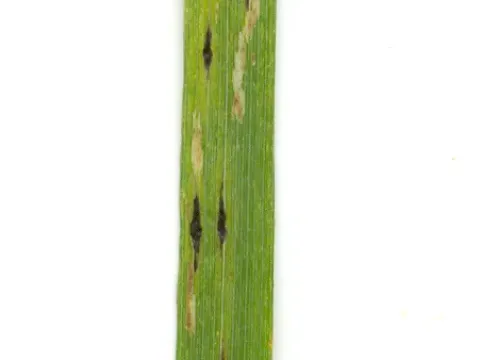
Symptoms appear as small, narrow, linear brown spots that run parallel to the leaf veins. This linear shape is a distinct diagnostic feature of the disease.
The centers of the spots often become grey or white as the tissue necrotizes, while the margins remain dark brown or reddish-brown.
Under high moisture conditions, a dark-colored fungal mat (conidia) can be observed on the surface of the lesions, particularly on the underside of the leaves.
Severe infections lead to leaf yellowing and death, causing the canopy to appear chlorotic or burnt from a distance in extreme cases.
Infected panicles show dark spots on the glumes, which may result in poor development or sterility of the grains, and the panicle branches may break due to infection.
The most effective management strategy is the deployment of resistant or tolerant rice varieties, which provide the primary defense against the pathogen.
Cultural practices, such as the destruction or deep incorporation of rice stubble and debris, are critical to reduce the initial inoculum load in the field.
Balanced fertilization is essential; excessive nitrogen application can increase plant susceptibility by creating lush, soft tissues that are easily penetrated by the fungus.
Chemical control involving the timely application of fungicides is recommended when the disease threshold is reached during the vegetative and reproductive growth phases.
- Utilizing clean and certified disease-free seeds.
- Practicing crop rotation to break the pathogen's lifecycle.
- Maintaining optimal plant density to ensure adequate air circulation.
- Implementing integrated pest management (IPM) protocols.